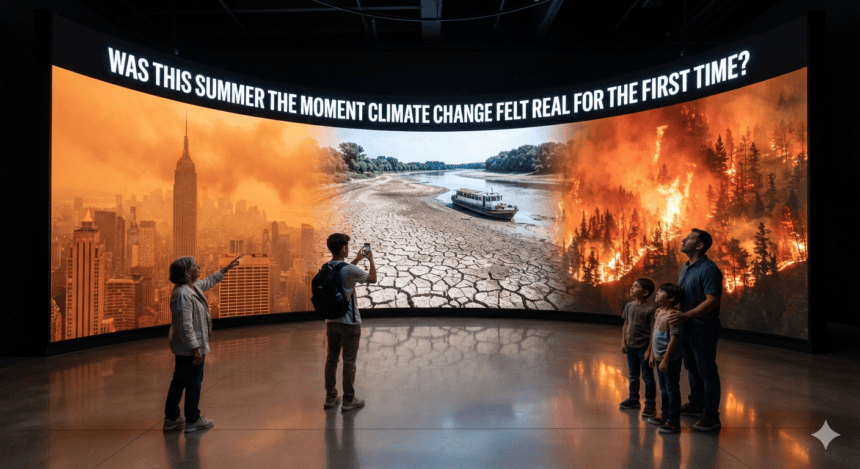
Heatwaves that shattered records weren’t just anomalies this year; they were a baseline. From the scorched asphalt of Phoenix to the flooded streets of Central Europe, the climate crisis shed its abstract status. It stopped being a topic for future-focused policy papers and became a daily, visceral reality for millions.
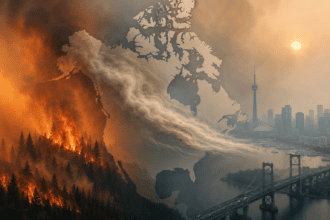
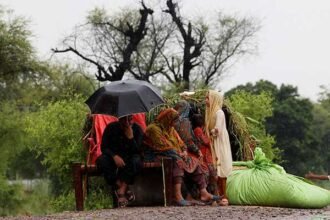
The numbers provide a cold look at a boiling season. July 2024 saw the hottest individual days ever recorded by global monitoring agencies. In Pakistan, the heat index surged well past 50°C in several districts, pushing the limits of human survival. In the Mediterranean, persistent marine heatwaves decimated local ecosystems, while wildfires in Canada and the Amazon burned through carbon sinks once thought to be resilient.
For most, the “realness” didn’t hit through a scientific report. It hit through the grocery bill. Crop failures in major agricultural belts sent food prices spiking, turning a weather event in one hemisphere into a fiscal crisis in another. When the cost of living climbs because the climate refuses to cooperate, the debate over “long-term targets” loses its patience.
“We’ve moved past the era of warning signs,” said Dr. Elena Rossi, an atmospheric scientist who has tracked regional temperature shifts for two decades. “We are now living in the era of consequence. The systems we built for a stable climate are failing under the pressure of a chaotic one.”
The psychological shift is arguably the most significant development. For years, climate change was treated as a distant threat—a concern for the next generation. This summer, that narrative collapsed. When schools shuttered because of extreme heat and insurance companies began pulling coverage from disaster-prone regions, the abstract became personal.
Yet, the policy response remains fragmented. International summits continue to produce pledges that lag behind the actual pace of environmental degradation. While governments debate the mechanics of energy transitions, the atmosphere is already dictating the terms of the economy.
If 2024 is remembered, it won’t be for its record-breaking temperatures alone. It will be remembered as the moment the gap between climate rhetoric and lived experience finally closed. The question is no longer whether the planet is changing, but how much more disruption society is prepared to absorb before the current model of normalcy breaks for good.