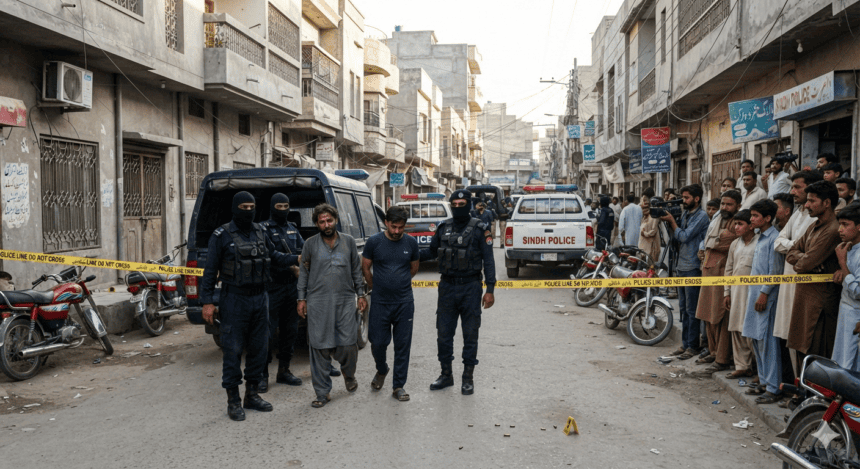
Karachi police have arrested two primary suspects linked to the brazen attack that left two officers dead and another injured in the city’s Korangi area yesterday. Investigators identified the pair during a targeted raid overnight, recovering weapons and a motorcycle believed to have been used in the ambush.
The attack occurred during a routine patrol. Unidentified gunmen on a motorcycle opened fire on the police vehicle, giving the officers no time to return fire before speeding away into the dense traffic of the industrial district. The victims, identified as Head Constable Zeeshan and Constable Khalid, died on the spot.
The arrests follow a high-pressure directive from the Sindh Inspector General, who ordered a city-wide dragnet late last night. Police forensic teams spent hours combing the crime scene, eventually tracking the suspects through a combination of CCTV footage from nearby factories and cellular data triangulation.
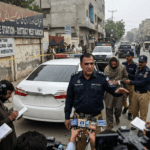
“We have the men who pulled the triggers,” a senior counter-terrorism officer told reporters this morning. “They aren’t just street criminals; they have a history of targeting law enforcement to disrupt security in the district.”
Despite the arrests, the atmosphere in Korangi remains tense. Local residents are questioning how such a daylight assault could happen on a main thoroughfare. The incident marks the third time in six months that police patrols have been targeted in this sector, fueling long-standing frustration over the city’s inability to curb organized militant activity in its peripheries.
The suspects are currently being held at an undisclosed location for further interrogation. Investigators are now working to determine if the pair acted on orders from a larger syndicate or if this was an isolated act of vengeance.
For the families of the two fallen officers, the swift arrests offer little solace. As the police department prepares for funeral rites, the focus shifts to whether this arrest will actually dismantle the network behind the violence—or if the next patrol remains just as vulnerable.