The escalating conflict between Israel and Iran is pushing global oil markets into a precarious state, threatening to drive up heating oil prices just as temperatures begin to plummet across the Northern Hemisphere. While the market has seen volatility before, the current risk of a direct strike on Iranian energy infrastructure has traders bracing for a supply crunch that could hit home-heating budgets hard.
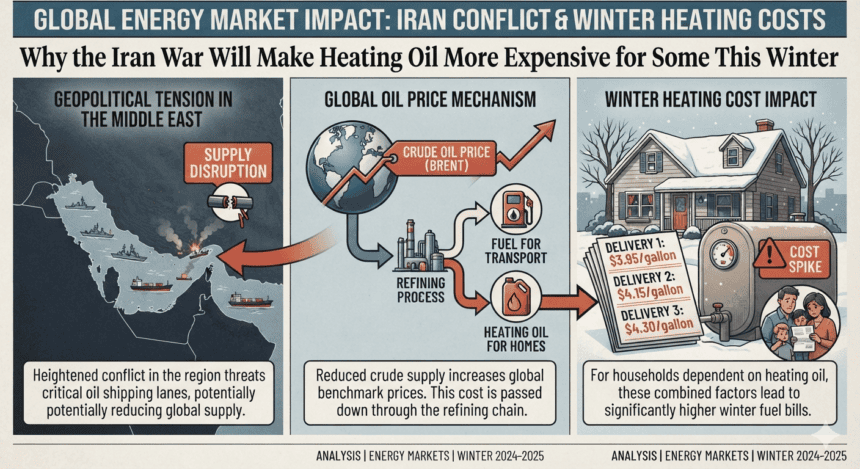
Global benchmark Brent crude has already fluctuated sharply on reports that Israel may target Iranian oil facilities in retaliation for recent missile strikes. If those facilities—which account for roughly 3% of global supply—are taken offline, the immediate impact would be a supply gap that sends prices for refined products, including heating oil, soaring.
For households in the Northeast United States and parts of Europe, the timing is particularly brutal. Many of these regions remain heavily reliant on heating oil to survive the winter. Unlike natural gas, which is often tied to long-term contracts, heating oil is a refined product traded on the open market. When crude prices jump, the cost at the pump and the delivery truck tends to follow within days.
“The market is pricing in a risk premium that wasn’t there two weeks ago,” said one regional energy analyst. “We aren’t just talking about a slight increase. If a major terminal in the Persian Gulf is impacted, you’re looking at a logistical nightmare that makes current inventory levels irrelevant.”
The geopolitical stakes are compounded by the Strait of Hormuz. Roughly 20% of the world’s total oil consumption passes through this narrow waterway. Any military action that disrupts shipping lanes here would force tankers to take longer, more expensive routes, ballooning insurance premiums and shipping costs that are ultimately passed down to the consumer.
While the U.S. government maintains that domestic strategic reserves are sufficient to buffer against minor shocks, the reality for the average consumer is rarely so forgiving. Refineries are already operating on thin margins, and any sudden spike in feedstock prices forces them to raise wholesale costs immediately to protect their bottom line.
For families already stretching their monthly budgets, a 10% to 15% increase in heating oil costs could be the difference between a warm home and a utility crisis. As the standoff between Tehran and Tel Aviv intensifies, the cost of winter comfort is no longer just a matter of weather forecasts — it is now hostage to the shifting realities of Middle Eastern warfare.