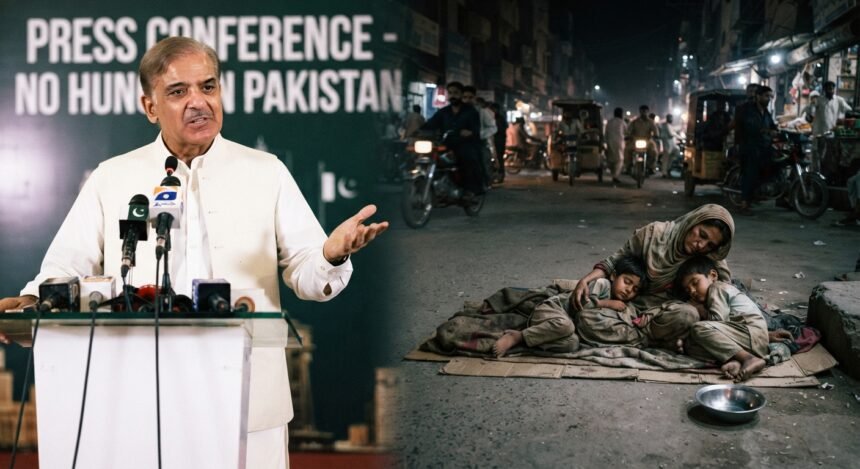
The federal government has rejected the latest Global Hunger Index (GHI) findings, dismissing the report’s assessment of Pakistan’s food security as a coordinated effort to smear the country’s image.
A senior aide to Prime Minister Shehbaz Sharif labeled the index “propaganda” during a press briefing Wednesday, asserting that the data fails to reflect the ground reality of social safety nets currently in operation. The aide insisted that government-led initiatives, including targeted subsidies and the Benazir Income Support Programme (BISP), ensure that “no one sleeps hungry” in the country.
The GHI, published annually by Concern Worldwide and Welthungerhilfe, placed Pakistan at 102nd out of 127 countries in its 2024 report. The index categorizes Pakistan’s hunger level as “serious,” citing significant gaps in child nutrition, stunting, and food affordability.
Critics of the government’s stance argue that the dismissal ignores the economic strain felt by millions. Inflation has remained in the double digits for much of the year, pushing basic staples like flour, wheat, and dairy beyond the reach of lower-income households. While the government points to BISP disbursements, independent economists suggest that cash transfers are increasingly being swallowed by rising utility bills and fuel costs, leaving little for adequate caloric intake.
The aide’s rejection of the report follows a recurring pattern in Islamabad’s response to international rankings. Whenever global indices highlight deficits in human development, press freedom, or economic stability, the standard response is to question the methodology or the motives of the authors.
“If the data is flawed, show us the alternative,” said an Islamabad-based policy analyst who tracks food security. “Dismissing the report as a conspiracy doesn’t fill a child’s plate. The government is focusing on the optics of the index rather than the underlying crisis of food inflation.”
For now, the administration remains firm. It has signaled that it will conduct its own internal assessment to refute the GHI metrics, though officials have yet to provide a timeline for when that data will be made public.
Until then, the gap between the government’s narrative of stability and the daily struggle of the average citizen to afford a meal remains as wide as ever.