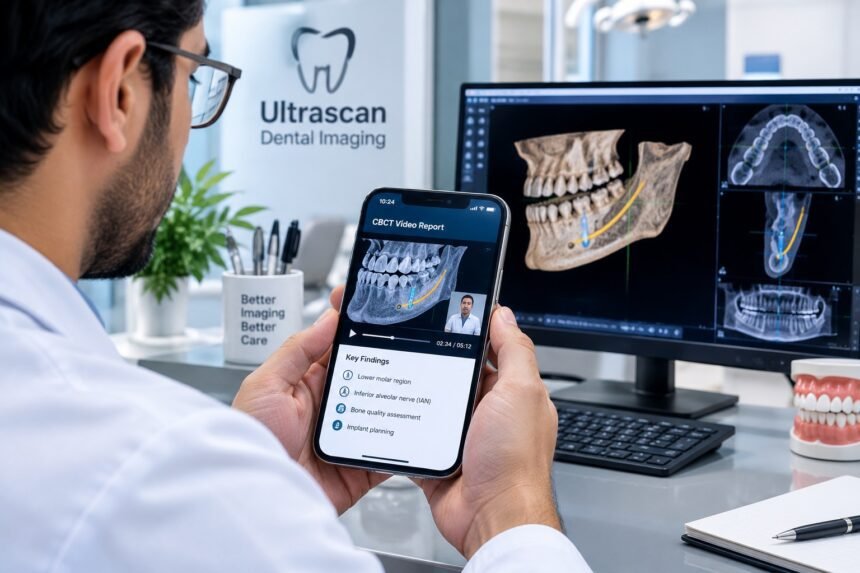
A dentist in Karachi has introduced an innovative approach to dental imaging by converting complex three-dimensional dental scans into personalised video reports that dentists can easily watch on their smartphones.
Dr. Danial Arshad, a dentist and dental entrepreneur, developed the service through Ultrascan, a dental imaging facility established with his father. The initiative aims to help dental practitioners understand advanced scans without having to navigate complicated imaging software or download large digital files.
The technology uses Cone-Beam Computed Tomography (CBCT), which produces detailed three-dimensional images of teeth, jawbones and surrounding anatomical structures. These scans can help dentists identify complex root canal anatomy, assess bone conditions and plan procedures such as dental implant placement.
However, CBCT files can be extremely large, sometimes reaching one to four gigabytes. Interpreting them also requires specialised software, technical knowledge and clinical experience, creating challenges for general dentists and recently graduated practitioners.
To address these difficulties, Dr. Arshad personally records narrated videos explaining the important findings in each scan. The reports are hosted online and can be viewed on smartphones, allowing dentists to review relevant anatomical details and understand their possible implications for treatment.
The service can be particularly useful when planning dental implants, as CBCT imaging helps clinicians assess available bone and identify nearby structures, including nerves. It can also assist in selected root canal cases where additional canals or complicated tooth anatomy may be difficult to identify through conventional two-dimensional X-rays.
According to Dr. Arshad, the customised video reports are included in Ultrascan’s existing imaging service without an additional reporting fee.
However, the video reports are intended to support clinical understanding rather than replace professional judgement or a comprehensive radiological assessment. Dentists must still examine patients, evaluate the full scan appropriately and seek specialist guidance when necessary.
The development highlights how digital technology is changing dental practice in Pakistan. By making complex imaging findings easier to understand, the initiative could help improve communication between dental imaging specialists and treating dentists, supporting more informed treatment planning.