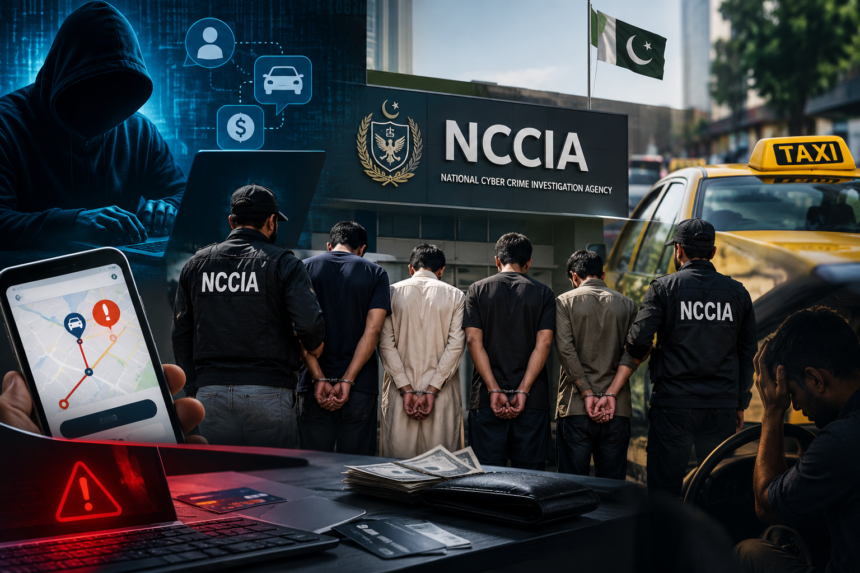
The National Cyber Crime Investigation Agency (NCCIA) has dismantled a sophisticated criminal network operating a systematic fraud scheme against ride-hailing drivers. Investigators confirmed the arrests of five key suspects during a late-night raid, ending a month-long operation that left dozens of drivers bankrupt.
The gang utilized a deceptive “verification” tactic. They posed as customer support representatives from popular ride-hailing platforms, calling drivers under the guise of updating their account security. Once a driver was on the line, the scammers pressured them to share one-time passwords (OTPs) or install third-party remote access software.
“They were surgical,” said a senior NCCIA investigator familiar with the case. “They didn’t just ask for passwords. They built trust by reciting the driver’s recent trip history and vehicle details before hitting them with a sense of urgency.”
Once they gained access to the drivers’ digital wallets, the suspects drained earnings accumulated over weeks of labor. For many victims, this meant losing their entire monthly income in a single afternoon. The agency estimates the total losses across the city have already surpassed several million rupees, though officials expect that number to climb as more victims come forward.
The syndicate operated out of a makeshift call center in an industrial district, using burner phones and encrypted messaging apps to evade digital surveillance. Forensic teams recovered dozens of SIM cards and several laptops containing databases of driver contact information, likely purchased from data brokers on the dark web.
This isn’t just about financial theft. It’s a targeted strike against the gig economy’s most vulnerable workforce. Ride-hailing platforms have struggled to contain these breaches, as scammers shift their tactics faster than security patches can be deployed.
NCCIA officials warned that no legitimate company will ever call a driver to request a password or demand access to their device. As the investigation widens, the agency is now tracking the source of the stolen driver databases, signaling that the crackdown on these syndicates is far from over.