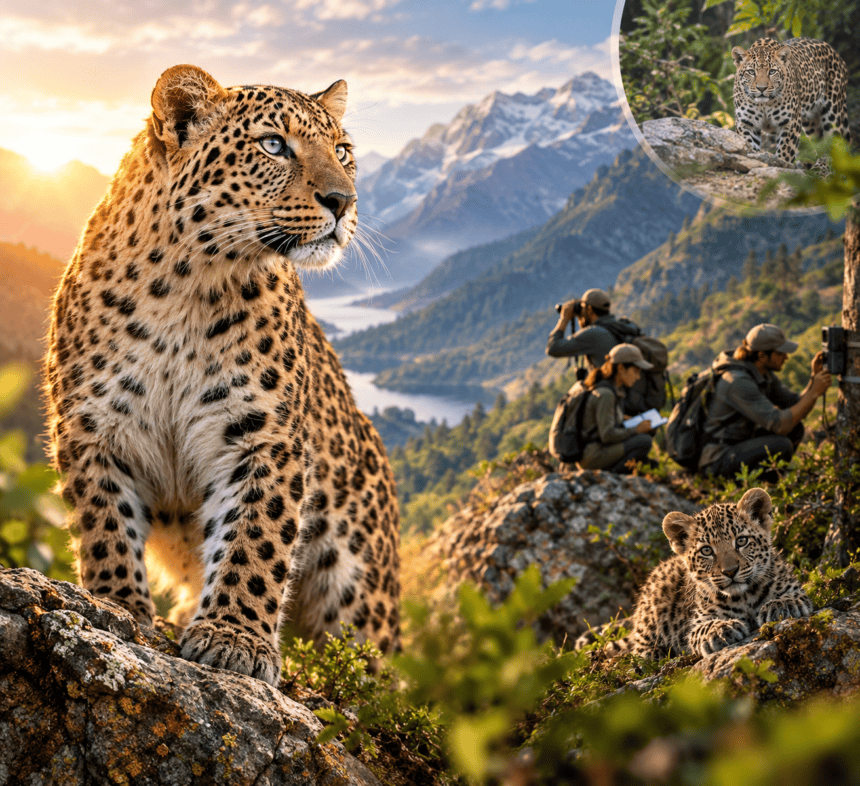
The elusive Caucasian leopard is clawing its way back from the brink. Recent field surveys in the Caucasus Mountains—a rugged, high-altitude landscape spanning parts of Russia, Azerbaijan, and Armenia—show the first confirmed signs of a stable, breeding population in over a decade.
Conservationists tracking the elusive cats have documented several new litters in remote corridors of the Zangezur region. These sightings are more than just a win for biodiversity; they mark a rare success story in a region where the species was once considered functionally extinct due to poaching and habitat fragmentation.
“We aren’t just seeing one or two stragglers anymore,” said Dr. Elena Volkov, a lead researcher with the Caucasus Wildlife Fund. “We are seeing a generational shift. The cubs born in these valleys are staying, establishing their own territories, and showing that the ecosystem can actually support them again.”
The recovery rests on a shift in local strategy. For years, anti-poaching units focused on reactive enforcement. Today, the approach relies on community-led stewardship. In villages bordering the leopard’s core range, the fund has incentivized farmers to move away from grazing practices that invite conflict. By securing livestock pens and creating “safe passage” zones, the human-wildlife friction that historically drove the leopards away has dropped by nearly 40% in key sectors.
Despite the progress, the leopard’s future remains brittle. Genetic isolation is the primary hurdle. With populations split by national borders and infrastructure—including highways and mountain pipelines—the risk of inbreeding remains high. Experts warn that unless these fragmented corridors are reconnected, the current gains could stall.
The next phase of the project involves establishing a “trans-border corridor” between Armenia and Iran. It’s a massive logistical and political undertaking, requiring cooperation between nations that have historically viewed land management through a nationalistic lens.
For now, the focus is on the data. Trail cameras in the Southern Caucasus have captured clear, high-resolution footage of a female leopard with three cubs, a sign that the habitat isn’t just surviving—it’s functioning.
“Nature is resilient,” Volkov noted, “but only if we step back enough to let it work.”