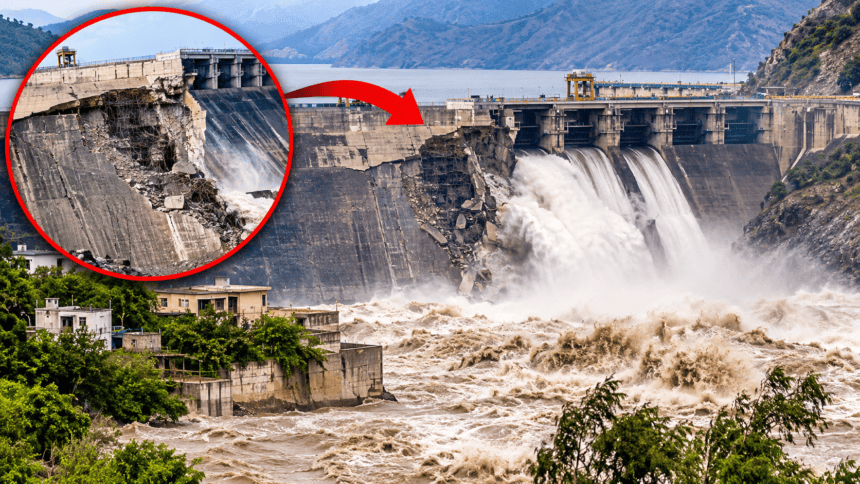
A structural breach at the Tarbela Dam’s auxiliary spillway sent a sudden surge of water downstream early Tuesday, forcing local authorities to issue immediate evacuation orders for villages along the Indus River.
The collapse, reported at approximately 4:15 a.m., occurred during routine maintenance on the facility’s fourth tunnel. While the main embankment remains stable, the failure of a secondary concrete barrier released an estimated 45,000 cusecs of additional water into the Indus, catching downstream communities off-guard.
“The situation is contained, but the surge was violent,” a senior engineer at the site said, speaking on condition of anonymity. “We had to open the primary spillways to balance the pressure, which is why the downstream flow spiked so rapidly.”
The impact was felt within minutes in the low-lying areas of Haripur and Swabi. Local police confirmed at least two dozen homes have been partially submerged, with livestock losses reported across three union councils. For residents, the surge brought back grim memories of the 2022 floods—a comparison officials are working hard to downplay.
“We aren’t looking at a total failure,” said the provincial disaster management spokesperson. “We’re looking at a localized structural fatigue that escalated due to current high-pressure operations.”
Critics, however, point to the aging infrastructure of the dam, which was commissioned in 1974. Despite ongoing upgrades to the power station, environmental experts have long warned that the spillway maintenance schedules were being pushed to their absolute limits to meet national power grid demands.
The Ministry of Water Resources has since ordered an emergency inquiry into the maintenance logs from the past six months. Engineers are currently working to reinforce the breached sector with rock-fill and high-density concrete, though officials admit the repair could take weeks to fully secure.
For now, the water level at the Tarbela reservoir is being kept at a lower threshold to prevent further strain on the damaged section. It is a precarious balance: hold too much water and risk another breach, or release too much and drown the downstream districts already struggling with the unexpected flood.