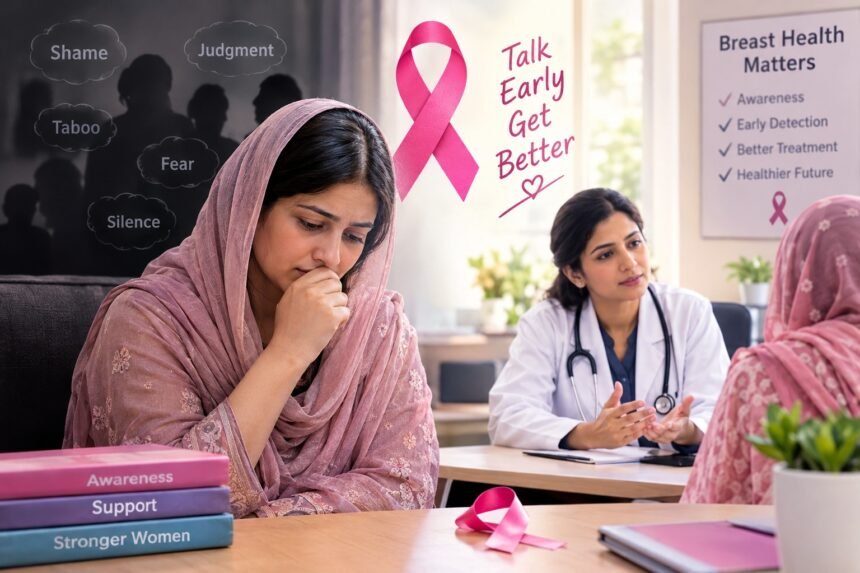
Pakistan: Social stigma and embarrassment surrounding breast cancer continue to prevent many women from openly discussing symptoms and seeking timely medical care. The fear of judgment, cultural restrictions, and misconceptions about the disease can make an already difficult health challenge even more complicated.
Breast cancer remains a major public health concern in Pakistan. Despite awareness campaigns, many women still hesitate to discuss changes in their breasts or seek medical advice because the subject is often considered sensitive or inappropriate to discuss openly.
This silence can have serious consequences. Women who feel uncomfortable reporting symptoms may delay visiting a healthcare professional, potentially allowing the disease to progress before it is diagnosed. Health awareness advocates stress that early medical assessment is important when unusual changes are noticed.
Social pressure can also affect women after diagnosis. Some patients fear rejection, discrimination, or negative reactions from family members and the wider community. These concerns may leave women feeling isolated at a time when emotional support is particularly important.
Experts and awareness organisations have repeatedly called for more open, respectful conversations about breast cancer. Families, educational institutions, healthcare professionals, and community leaders can all help challenge misconceptions and encourage women to seek medical advice without shame.
Public education should also explain the importance of recognising possible warning signs, understanding available screening options, and consulting qualified healthcare professionals. A new lump, unusual swelling, changes in breast shape or skin, or nipple changes should be assessed by a healthcare professional. Such symptoms do not automatically mean cancer, but they should not be ignored.
Reducing the stigma surrounding breast cancer requires a supportive environment in which women can discuss their concerns freely and access appropriate medical care. Raising awareness, improving access to screening, and encouraging early consultation can help address the barriers that prevent women from seeking assistance.
Breast cancer should be treated as a health issue rather than a source of shame. Open conversations and timely medical attention can help women make informed decisions about their health.