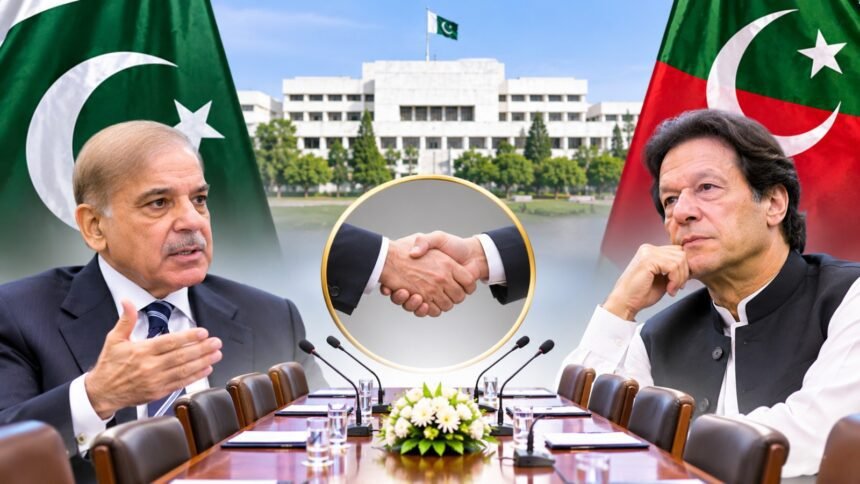
Calls are growing for the government and opposition to resume political dialogue and find a peaceful solution to the ongoing political deadlock in Pakistan.
Political tensions between the ruling coalition and the Pakistan Tehreek-e-Insaf (PTI) have continued to affect the country’s political environment, with key issues remaining unresolved.
Recent developments suggest some willingness among opposition leaders to return to negotiations. PTI’s Khyber Pakhtunkhwa parliamentary party has supported dialogue with the federal government, while opposition leaders have also expressed readiness to participate in discussions on electoral reforms.
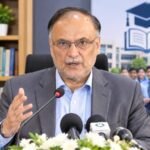
Prime Minister Shehbaz Sharif’s government has repeatedly offered talks to the opposition, urging political leaders to resolve their differences through parliamentary and constitutional channels.
However, disagreements over political conditions, access to PTI founder Imran Khan and the situation in Khyber Pakhtunkhwa have complicated efforts to restart meaningful negotiations.
Political observers believe that continued confrontation could further deepen uncertainty and affect governance and economic confidence.
They stress that both sides need to demonstrate flexibility, build mutual trust and prioritise national interests over political differences.
A negotiated settlement, analysts say, could help restore political stability, strengthen democratic institutions and create space for addressing the country’s major economic and security challenges.