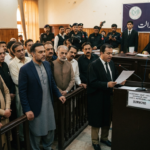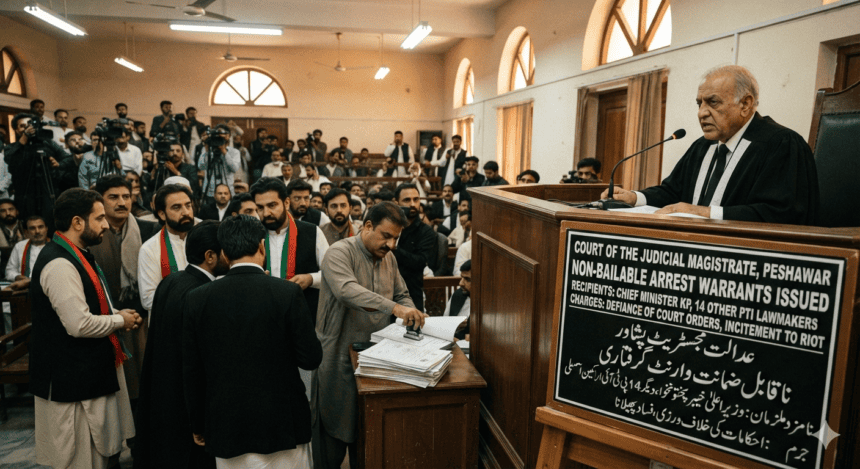
PESHAWAR — A local anti-terrorism court in Islamabad issued non-bailable arrest warrants for Khyber Pakhtunkhwa Chief Minister Ali Amin Gandapur on Tuesday, intensifying the legal pressure on the provincial leadership.
The order follows a series of hearings where the Chief Minister failed to appear in connection with cases registered at the Sangjani police station. These cases, filed in the wake of recent political unrest in the capital, include charges related to vandalism, rioting, and attacking state property.
The warrants aren’t just a legal formality; they represent a sharp escalation in the ongoing friction between the federal government and the PTI-led provincial administration. By opting for non-bailable warrants, the court has effectively signaled that it has run out of patience for the Chief Minister’s repeated absences.
For PTI, the move is a direct hit to its frontline leadership. Gandapur has been the most vocal critic of the current federal setup, often leading protest marches that have paralyzed Islamabad’s access points. The government now has a clear legal pathway to take him into custody if he crosses into the capital’s jurisdiction, turning his political maneuvers into a personal legal liability.
Legal experts suggest that the timing of these warrants is far from coincidental. With the party gearing up for further agitation, the state is utilizing the judicial process to neutralize its most prominent agitator.
“The court has moved past the stage of notices,” said a senior lawyer familiar with the proceedings who requested anonymity. “Issuing non-bailable warrants is a strong message. It forces the provincial administration into a corner where they must either surrender their leader or prepare for a direct confrontation with law enforcement agencies.”
The provincial government in Peshawar has yet to issue a formal response, though party insiders suggest they view the warrants as politically motivated. PTI spokespersons have consistently maintained that these cases are fabricated, intended to sideline the party’s key organizers ahead of any potential mass mobilization.
Police are now tasked with the execution of these warrants, a process that could trigger significant unrest if they attempt to serve them at the Chief Minister’s official residence or during his public appearances.
The legal net is tightening around the PTI leadership, and with these warrants now active, the Chief Minister’s next move will define whether this becomes a courtroom battle or a street-level standoff.