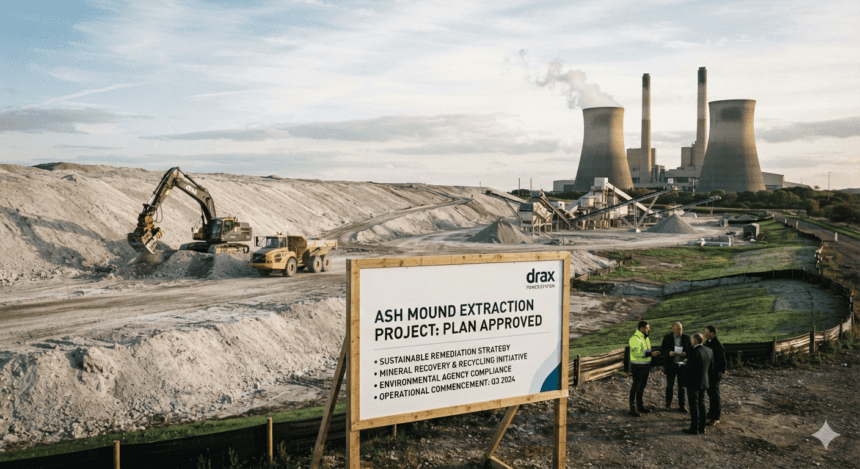
The UK’s largest power station, Drax, has secured planning permission to extract millions of tonnes of pulverised fuel ash (PFA) from its historic disposal site in North Yorkshire. The move marks a shift in how the energy giant manages its industrial legacy while tapping into a commodity currently in high demand.
The North Yorkshire Council’s decision allows Drax to excavate the Barlow Mound, a facility that has remained dormant for years. The site holds roughly 3.5 million tonnes of ash—a byproduct of decades of coal-fired electricity generation.
For the construction industry, this is a vital lifeline. PFA is a key ingredient in sustainable concrete, acting as a cement replacement that reduces the carbon footprint of large-scale infrastructure projects. With global supply chains for building materials under pressure, the material buried in North Yorkshire has transformed from industrial waste into a high-value asset.
Drax stopped burning coal at its Selby plant last year, fully transitioning to biomass. This pivot left the company with massive stockpiles of coal-related waste. By reclaiming the Barlow site, the company avoids the environmental burden of long-term storage while generating revenue from the extraction process.
Local residents and environmental groups have kept a close watch on the project. The primary concerns center on the logistics of the operation—specifically the increased heavy goods vehicle (HGV) traffic on local roads during the extraction phase. Under the approved plan, Drax must adhere to strict traffic management protocols to minimize disruption to nearby villages.
The extraction is expected to take several years to complete. Once finished, the company is obligated to restore the land, potentially converting the area into a nature reserve or public green space. This restoration aspect was a key factor in securing local support for the planning application.
The project isn’t just about clearing land. It’s a pragmatic solution to a circular economy problem. By turning a mid-century waste mound into a 21st-century building resource, Drax is effectively scrubbing the last traces of its coal era from the landscape while feeding the concrete industry’s hunger for low-carbon alternatives.
Work is expected to begin within the coming months, marking the final chapter for one of the UK’s largest coal-ash repositories.