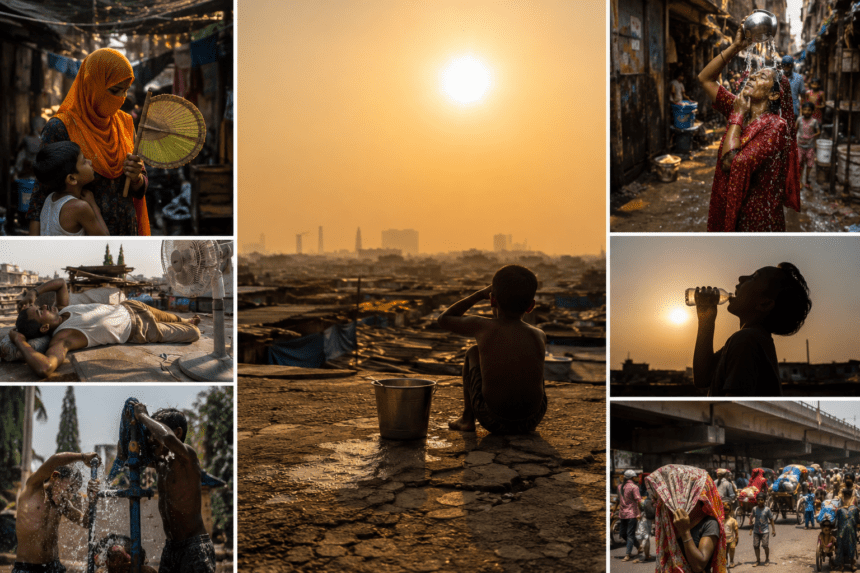
The thermometer in Jahangirpuri hit 46°C by noon Tuesday. In the cramped, tin-roofed shanties of this northern Delhi neighborhood, the heat isn’t just an inconvenience; it’s a structural hazard.
For residents, the day begins with a scramble for water. The municipal supply is erratic, often arriving as a thin trickle during the hottest hours. Without money for electric fans—let alone air conditioning—families spend their afternoons huddled under damp rags or sitting on the floor, where the air stays marginally cooler than near the sweltering, heat-trapping metal ceilings.
The “urban heat island” effect hits places like Jahangirpuri harder than the city’s leafy, affluent suburbs. Concrete density, lack of green cover, and the prevalence of corrugated iron roofs turn these homes into ovens. During the current heatwave, surface temperatures inside these dwellings have been recorded at 50°C and above.
“The roof feels like it’s burning your hand if you touch it,” said Ramesh Kumar, a daily wage laborer who shares a ten-by-ten room with five relatives. “We work outside in the sun to earn, and we come back to a room that doesn’t let us breathe. There is no escape.”
Public health data mirrors the desperation. Local clinics report a sharp uptick in heatstroke, severe dehydration, and respiratory distress cases over the last fortnight. Yet, many residents avoid the hospital until symptoms become dire, fearing the loss of a day’s wages.
City officials have set up a few “cooling centers” and water stations, but they remain scarce in the densest parts of the settlement. Activists argue that temporary relief measures ignore the root causes: poor housing infrastructure and the widening gap in how different classes experience Delhi’s climate.
The India Meteorological Department expects temperatures to remain in the “severe” category for at least another week. For those in Jahangirpuri, the forecast isn’t just a number on a screen—it’s a countdown to another night of struggling to sleep in a room that refuses to cool down.