Sweltering summer heat turns hydration into a full-time job. Most people reach for a plastic bottle, but nutritionists increasingly suggest a more effective strategy: eating your water.
Fruits and vegetables aren’t just nutrient-dense; they are biological water storage units. When you consume high-water-content produce, you get a slower, more sustained release of fluid into your system, accompanied by essential electrolytes like potassium and magnesium that plain water lacks.
Here are seven ways to hit your hydration goals without forcing down another glass of tap water.
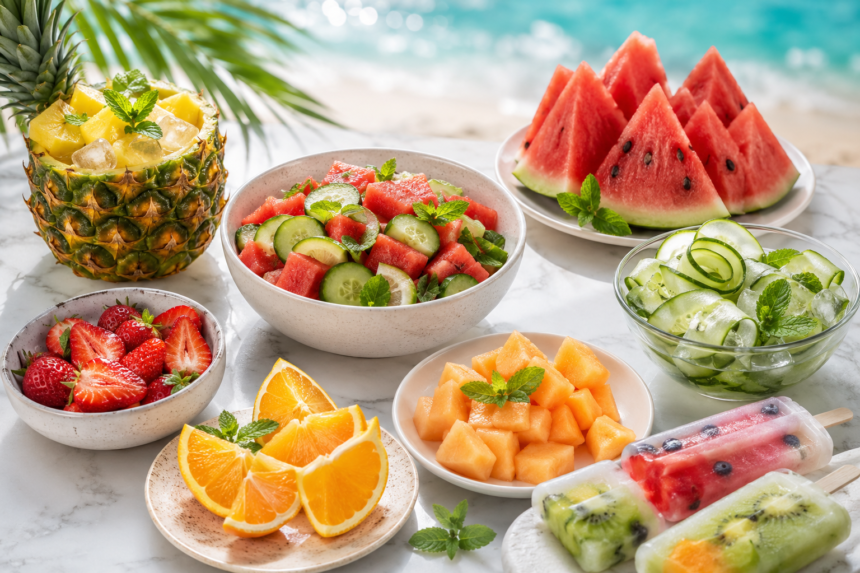
1. Cucumber (96% Water)
The humble cucumber is essentially a crunchy water bottle. Beyond the hydration, it contains silica, which promotes skin health a necessity when the sun is at its peak. Slice them into salads or toss them into a blender for a chilled gazpacho.
2. Watermelon (92% Water)
It’s the gold standard for summer snacking for a reason.Watermelon is packed with lycopene, a potent antioxidant that helps protect skin cells from UV damage. It’s also rich in citrulline, an amino acid that helps improve blood flow and exercise performance.
3. Zucchini (95% Water)
Most people cook it, but raw zucchini is a hydration powerhouse. Shave it into ribbons for a cold salad or add it to your morning smoothie. You won’t taste it, but your cells will feel the difference.
4. Strawberries (91% Water) These berries offer a hydration boost alongside a heavy dose of Vitamin C. They are perfect for snacking on the go or mixing into a bowl of Greek yogurt, which adds a bit of protein to keep your energy stable through the afternoon slump.
5. Celery (95% Water)
Celery is a natural diuretic, helping the body flush out excess sodium. It’s low in calories but provides a satisfying crunch. Dip it in hummus to add healthy fats, which helps your body absorb the vitamins found in the stalks.
6. Peaches (89% Water)
Stone fruit season provides a sweet alternative to water. Peaches are high in potassium, which helps regulate fluid balance in the body. They are at their best when ripe; if they are too soft, blend them into a chilled fruit soup.
7. Bell Peppers (92% Water)
Red, yellow, or green all bell peppers are high-hydration, high-fiber snacks. They contain more Vitamin C than oranges, making them a dual-purpose tool for both hydration and immune support during travel-heavy summer months.
The Bottom Line While these foods are excellent for maintaining fluid levels, they shouldn’t replace your primary water intake entirely. Think of them as a hydration supplement. By integrating these seven items into your daily diet, you’re not just snacking—you’re hydrating your body from the inside out, one bite at a time.