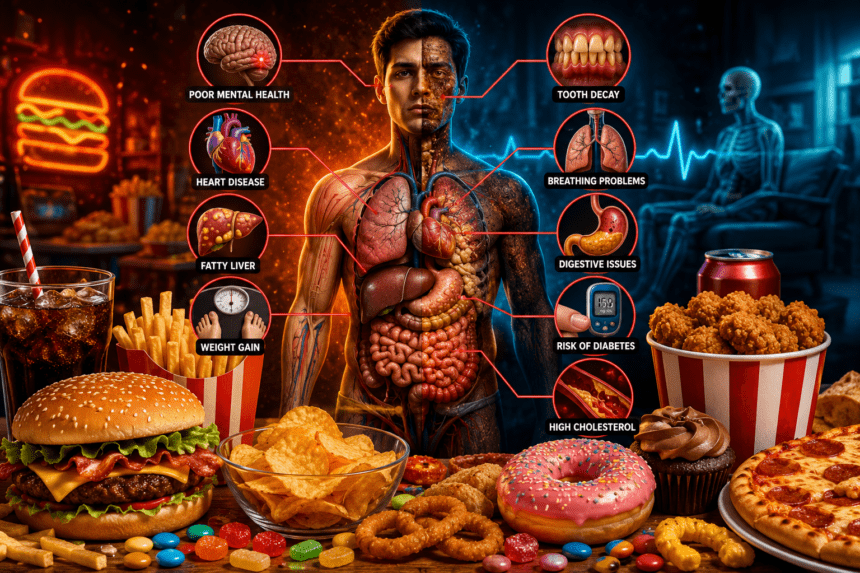
Junk food refers to processed and unhealthy food items that are high in sugar, salt, and unhealthy fats but low in essential nutrients. Examples include burgers, fries, chips, soft drinks, and packaged snacks. While these foods may taste appealing and are easy to access, regular consumption can have serious negative effects on the human body.
One of the most common effects of junk food is weight gain and obesity. These foods contain high calories and unhealthy fats that are quickly stored in the body as fat. Over time, this increases the risk of obesity, which is linked to many other health problems.
Junk food also has a harmful impact on heart health. The high levels of saturated fats and trans fats can increase cholesterol levels in the blood. This leads to blocked arteries, high blood pressure, and a greater risk of heart disease and stroke.
Another major effect is poor digestion. Junk food lacks fiber, which is important for a healthy digestive system. As a result, people who consume it frequently may suffer from constipation, bloating, and other stomach issues.
It also affects mental health and energy levels. Although junk food gives a temporary boost of energy, it often leads to fatigue, mood swings, and reduced concentration later. Studies also suggest a link between excessive junk food intake and increased risk of depression and anxiety.
In children and teenagers, junk food can negatively affect growth and development, as their bodies need proper nutrients for healthy physical and mental development.
In conclusion, while junk food is convenient and tasty, its long-term effects on the human body are harmful. A balanced diet rich in fruits, vegetables, whole grains, and proteins is essential for maintaining good health and preventing diseases.