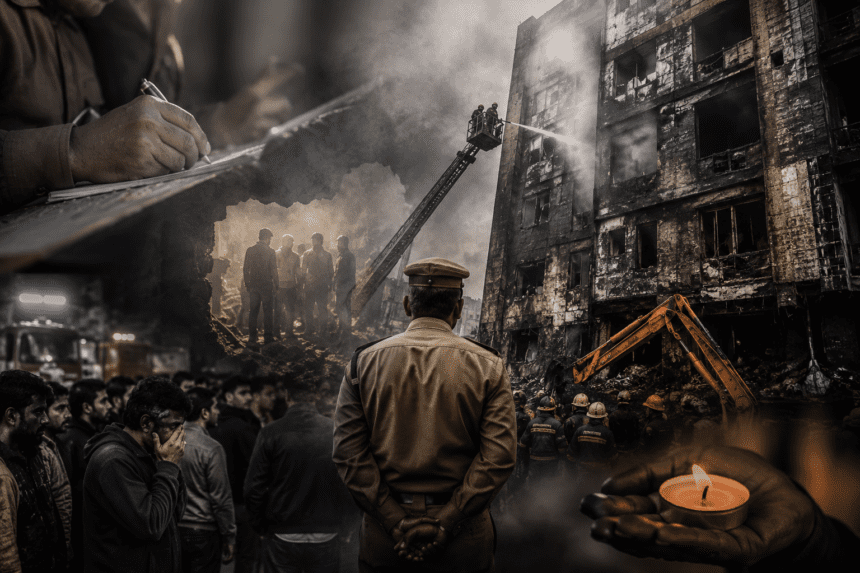
Fifteen people died Tuesday after a massive fire broke out in a multi-story residential building in a northern Indian city. The blaze, which broke out in the early hours, trapped residents as smoke filled the narrow stairwells.
Firefighters pulled survivors from balconies using hydraulic ladders, but for many, the rescue arrived too late. Local authorities confirmed the death toll includes several children and elderly residents who were unable to evacuate the smoke-choked corridors.
The state government has ordered a high-level judicial inquiry into the incident. Early reports from the site suggest the building lacked basic safety clearances, including functional fire extinguishers and an emergency exit route.
“The fire spread with terrifying speed,” said a witness who lives across the street. “We heard screams, but the heat was too intense to get near the entrance.”
District officials are now scrutinizing building permits for the entire neighborhood. Investigations often follow these tragedies in India, though critics point to a recurring pattern of lax enforcement and systemic corruption that allows illegal structures to operate without oversight.
While the immediate focus remains on identifying the victims and providing medical care to the dozen still hospitalized, the tragedy has sparked immediate public outrage. Residents gathered outside the site hours after the flames were extinguished, demanding the arrest of the building’s owners.
The state chief minister has announced a compensation package for the families of the deceased, but for those who lost everything in the pre-dawn inferno, the promise of cash does little to answer why the building was allowed to remain occupied.
As forensic teams comb through the charred remains to determine the exact point of origin, the city’s municipal corporation faces mounting pressure to explain how such a high-density structure operated without a fire safety certificate.