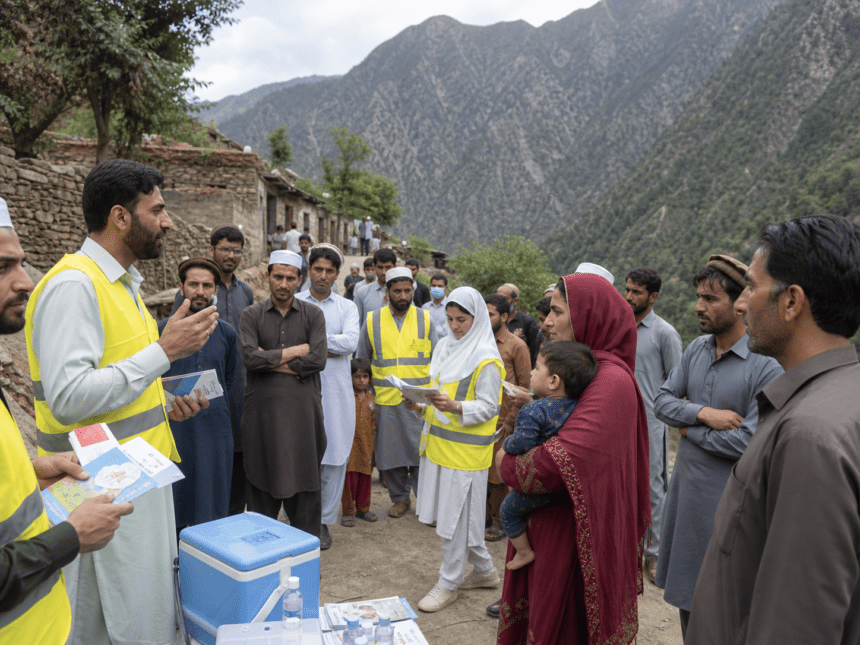
Health workers are navigating rugged terrain and deep-seated cultural skepticism this week, launching a concentrated immunization drive across the remote valleys of Kohistan to mark World Immunization Week.
The campaign aims to bridge a critical gap in regional health coverage where topography often dictates survival. Mobile teams are trekking through mountain passes, carrying cold-chain storage units on foot to reach settlements that remain inaccessible by road. For these communities, a routine vaccination isn’t a simple clinic visit; it’s a logistical operation.
“We aren’t just delivering vaccines, we’re fighting against isolation,” said a district health officer overseeing the deployment. He noted that while the goal is standard immunization, the primary hurdle remains the “last-mile” delivery in areas where electricity for storage is non-existent.
The campaign focuses on standard childhood immunizations, including polio, measles, and pneumonia, which have historically lagged in Upper and Lower Kohistan compared to the rest of the province.
Local health authorities are pairing medical staff with community elders to address lingering misinformation. These elders are acting as intermediaries, helping health teams gain access to households that have previously barred entry to vaccination workers.
The data underscores the urgency. Recent regional health reports indicate that nearly 30% of children in the most remote pockets of the district have missed at least one routine dose of essential vaccines.
This year, the strategy shifted from static center-based services to a “door-to-door” model, a change the district health office says was necessary to capture the nomadic and semi-nomadic populations moving through the mountain corridors. Despite the intensified effort, the reality of the terrain persists.
A single rainfall can wash out the temporary paths used by these teams, forcing them to wait days before resuming their work.
As the week-long initiative nears its midpoint, the success of the drive will be measured not just by the number of vials used, but by the teams’ ability to reach the most isolated settlements before the mountain weather turns. Whether this momentum lasts beyond the awareness week remains the primary concern for local health advocates.