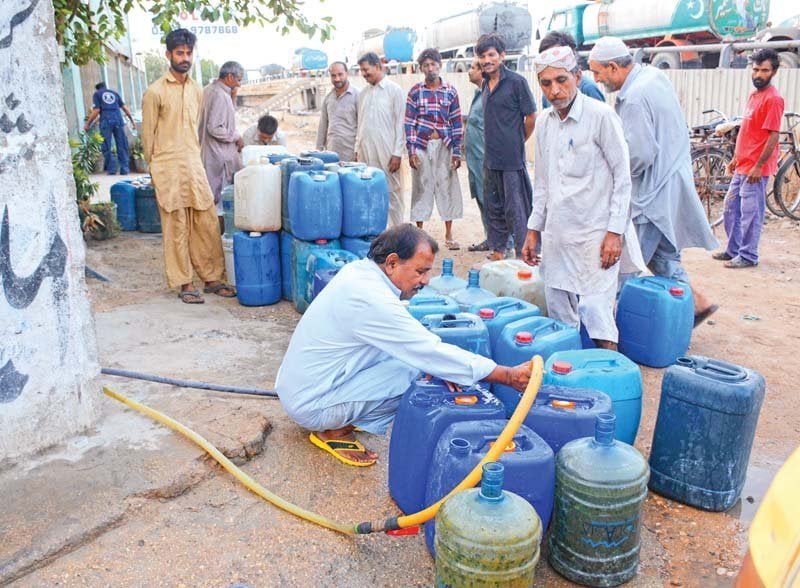
Karachi residents are entering their second week of severe water rationing as the city’s primary supply lines from the Indus River system continue to malfunction.
The Karachi Water and Sewerage Corporation (KWSC) confirmed that technical faults at the Dhabeji pumping station have slashed water inflow by nearly 30%. For millions, the result is dry taps, empty storage tanks, and a desperate scramble for private water tankers that have doubled their prices overnight. In neighborhoods like Gulshan-e-Iqbal and North Nazimabad, the crisis has moved from an inconvenience to a financial burden.
Residents are shelling out between 6,000 and 10,000 rupees for a single tanker—a luxury many simply cannot afford. “We haven’t seen a drop of municipal water in eight days,” said Asif Khan, a resident of Block 13.
“The tanker mafia is the only option, and they know we’re trapped. They charge whatever they want because they know the city government isn’t watching.” The KWSC maintains that repair crews are working around the clock to replace aging pumps and clear debris clogging the intake valves. However, the utility has struggled with chronic maintenance issues for years.
The current breakdown is merely the latest in a long string of infrastructure failures that leave the city vulnerable to even minor technical glitches. Political pressure is mounting. Opposition leaders have called for an emergency audit of the utility’s maintenance budget, pointing to a lack of investment in spare parts and outdated machinery.
Meanwhile, the provincial government has promised to restore full supply by the weekend, though similar assurances in past crises have rarely met their deadlines. For the average citizen, the promises offer little relief. Until the pumps at Dhabeji stabilize, Karachi’s residents will continue to rely on a mix of expensive private tankers and thinning groundwater reserves a cycle that keeps the city on the brink of a public health emergency.