Tea is one of the world’s most popular beverages, enjoyed for its flavor, warmth, and potential health benefits. Among the many options available, green tea and herbal tea are often considered healthy choices.
But are they the same? And if not, which one is actually healthier?
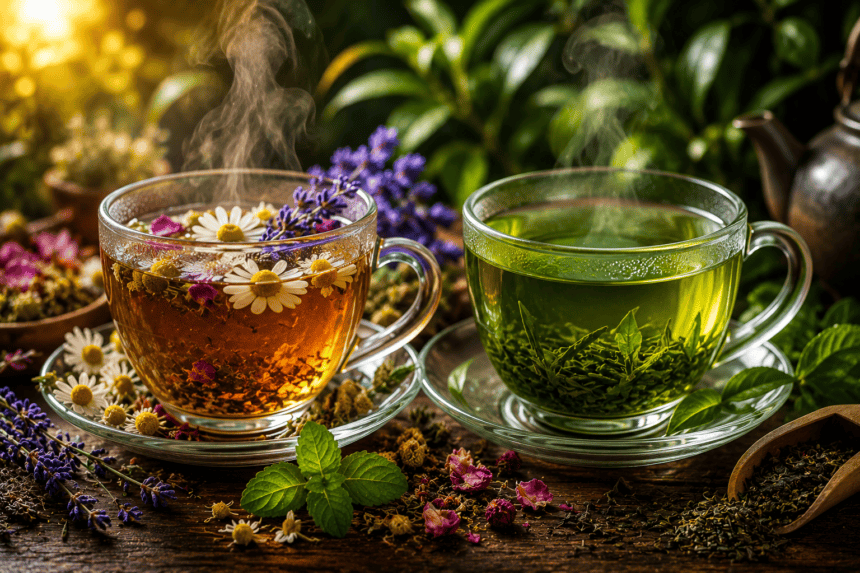
The answer depends on your health goals, lifestyle, and even the time of day you plan to drink them. While green tea is made from the leaves of the tea plant, herbal teas are prepared from herbs, flowers, fruits, seeds, or spices and are often naturally caffeine-free.
Let’s compare them in detail.
What Is Green Tea?
Green tea is made from the leaves of the Camellia sinensis plant. Unlike black tea, the leaves are minimally oxidized, helping preserve natural compounds called catechins, especially EGCG (epigallocatechin gallate).
Green tea naturally contains:
- Antioxidants
- Small amounts of caffeine
- L-theanine, an amino acid that may promote relaxation without causing drowsiness
What Is Herbal Tea?
Despite its name, herbal tea is technically not always “tea.”
It is an infusion made from ingredients such as:
- Chamomile
- Peppermint
- Hibiscus
- Ginger
- Cinnamon
- Lemongrass
- Rooibos
- Lavender
Each herbal tea has its own nutritional profile and potential benefits.
Antioxidants: Which Wins?
Both drinks provide antioxidants, but they contain different types.
Green tea is especially rich in catechins, which have been widely studied for their role in protecting cells from oxidative stress.
Many herbal teas also contain antioxidants, although the exact compounds vary depending on the ingredients.
Caffeine Content
One of the biggest differences is caffeine.
Green tea naturally contains caffeine, usually much less than coffee.
Herbal teas are often naturally caffeine-free, making them a good choice for evenings or for people who are sensitive to caffeine.
Which Is Better for Relaxation?
If your goal is relaxation before bedtime, caffeine-free herbal teas such as chamomile may be a better option.
Green tea contains L-theanine, which may promote calmness, but its caffeine content may not suit everyone late in the day.
Which Is Better for Weight Management?
Green tea has been studied for its possible role in supporting metabolism.
However, any effect appears to be modest, and drinking green tea alone is not a weight-loss solution.
Healthy eating and regular physical activity remain the most important factors.
Which Tea Is Better for Digestion?
Some herbal teas, such as peppermint and ginger tea, are traditionally used to support digestive comfort.
Research suggests ginger may help reduce nausea in certain situations.
However, not every herbal tea has the same effects.
Which One Is Better Overall?
There is no single winner.
Choose green tea if you want:
- A source of antioxidants
- A small amount of caffeine
- A refreshing daytime drink
Choose herbal tea if you want:
- A naturally caffeine-free beverage
- A relaxing evening drink
- Different flavors and herbal varieties
Can You Drink Both?
Absolutely.
Many people enjoy green tea during the day for its mild caffeine and herbal tea in the evening to unwind.
This combination allows you to enjoy the benefits of both while keeping your overall caffeine intake moderate.
The Bottom Line
Green tea and herbal tea each have unique advantages. Green tea is rich in antioxidants and contains beneficial plant compounds, while herbal teas offer a wide variety of flavors and are often naturally caffeine-free.
Instead of asking “Which one is healthier?”, a better question might be “Which one is healthier for my needs?”
Whether you choose green tea, herbal tea, or both, the healthiest approach is to enjoy them as part of a balanced diet and an overall healthy lifestyle.