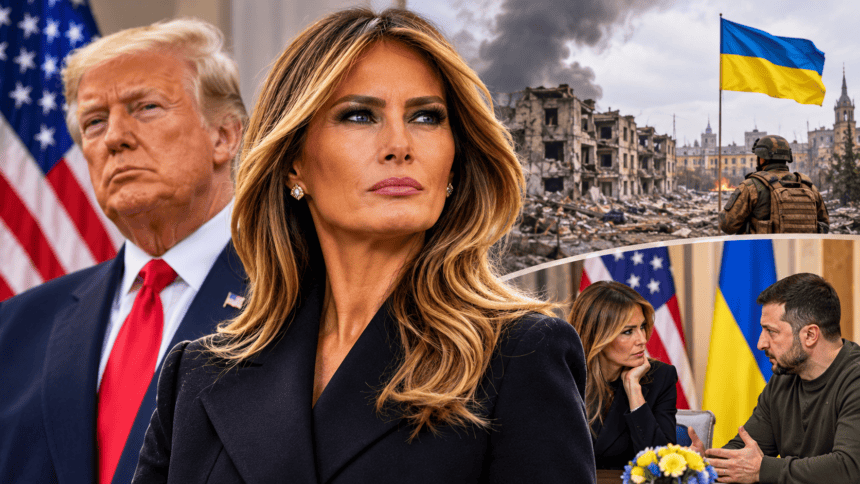
Melania Trump, long defined by her deliberate distance from the daily grind of Washington politics, is quietly positioning herself as an unconventional bridge in the Ukraine conflict. While her husband, Donald Trump, frequently frames the war through a lens of transactional skepticism, the former First Lady has adopted a softer, more nuanced tone that suggests a private influence on his worldview.
The shift isn’t happening in press releases or rallies. It’s unfolding in the margins. Sources close to the campaign suggest Melania has consistently advocated for a more humanitarian-focused approach, distancing herself from the “America First” isolationism that often defines the Trump movement. She understands that the optics of the war—particularly the civilian toll—carry weight with the suburban voters her husband needs to win back.
Her approach isn’t just about political strategy; it’s rooted in her own history. Melania has maintained lines of communication with figures who prioritize regional stability, acting as an informal sounding board. When Donald Trump speaks about “ending the war in 24 hours,” he’s selling a headline. When Melania speaks—or chooses not to—she is signaling a preference for a diplomatic exit that doesn’t leave the U.S. looking like it abandoned a sovereign nation to total collapse.
The “dark horse” label fits because she avoids the traditional diplomatic circuit. She doesn’t hold briefings or meet with foreign ministers. Instead, her influence is filtered through the private conversations held at Mar-a-Lago, where she serves as a moderating force against the more radical voices in the former president’s orbit.
Analysts often miss this because they look for public statements. They look for a manifesto. But Melania doesn’t operate that way. She operates by withholding or granting approval, a technique that has kept her husband’s rhetoric from veering into territory that might alienate moderate European allies.
The strategy carries real risk. By softening the edges of the Trump doctrine, she faces pushback from the populist wing of the GOP that views any interest in Ukraine as a betrayal of domestic priorities. Yet, she remains unmoved. She realizes that if the Trump brand is to remain relevant globally, it cannot be tied entirely to the abandonment of Kyiv.
Whether this translates into a tangible change in policy remains speculative. But for now, the former First Lady is playing a role that neither the DNC nor the RNC knows how to categorize. She is the internal counterweight, proving that in the Trump household, the most effective diplomacy is often the kind that goes completely unrecorded.