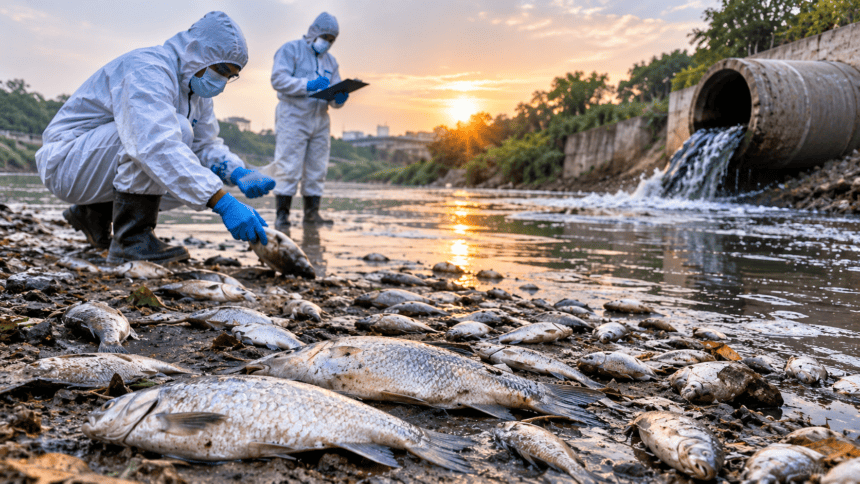
The local environmental protection agency launched an investigation Tuesday after thousands of dead fish turned up along a five-mile stretch of the Blackwood River. Residents reported the stench early Monday morning, finding carp and bass floating belly-up in the shallows.
Water samples collected by the regional authority show oxygen levels in the river have plummeted, likely caused by an unauthorized chemical discharge from the nearby industrial zone. While the specific substance remains under laboratory analysis, officials suspect a failed filtration valve at a chemical processing plant located upstream.
“The scale of this is massive,” said Sarah Jenkins, a local river warden who first flagged the incident. “I’ve worked this stretch for fifteen years, and I’ve never seen a die-off this concentrated. It’s not just the fish; it’s the entire ecosystem here that’s been hit.”
The plant in question, ChemCorp Solutions, issued a brief statement Tuesday afternoon denying any intentional wrongdoing, citing a “mechanical malfunction” during routine maintenance. They’ve pledged to cooperate with investigators but haven’t provided a timeline for containment or cleanup.
For the surrounding community, the impact is immediate. The river serves as a primary water source for local irrigation, and health officials have issued a temporary ban on all recreational activity, including fishing and swimming, until further notice.
Environmental groups are already calling for more than just a fine. They argue that the facility has been flagged for minor leaks twice in the past eighteen months, yet faced no regulatory repercussions.
“A fine is just a cost of doing business for a company this size,” said David Halloway, a lead researcher with the River Watch Alliance. “Unless the state suspends their operating license until they prove their systems are actually safe, we’re just waiting for the next spill.”
The environmental agency expects preliminary toxicity results by Thursday. Until then, the river remains a dead zone, and the residents of Blackwood are left waiting to see if the state has the teeth to hold the polluters accountable.