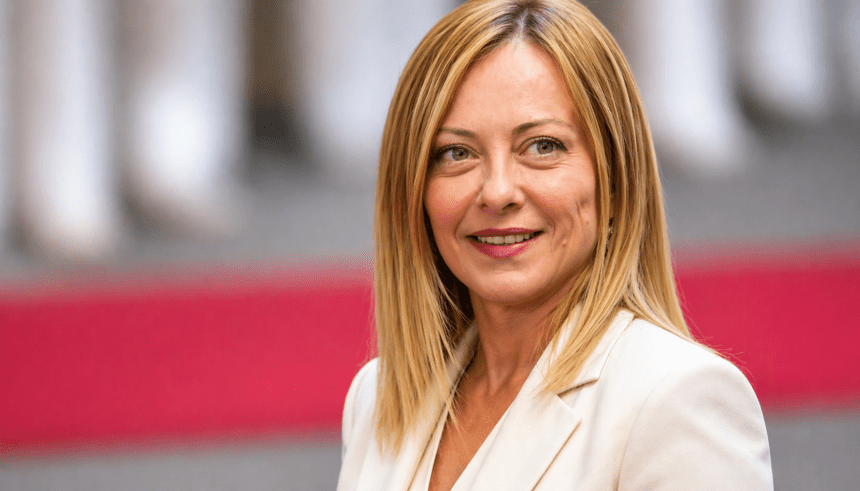
Italy sharply escalated a diplomatic row with Moscow on Tuesday after Russian television host Vladimir Solovyov launched a foul-mouthed on-air attack on Prime Minister Giorgia Meloni, prompting Rome to summon Russia’s ambassador for a formal protest. Italy’s foreign ministry, the Farnesina, said Ambassador Aleksey Paramonov was called in after Solovyov insulted Meloni during a live broadcast, in what Italian officials treated as more than just another television outburst.
The remarks were unusually crude, even by the standards of Russia’s hyper-political talk shows. According to ANSA, Solovyov called Meloni a “fascist b**ch,” a “certified idiot,” and a “bad woman,” while also using a mocking slur-like nickname and accusing her of betraying US President Donald Trump. The comments were made on his program Polnyj Kontakt (“Full Contact”), where he spoke partly in Italian while attacking her.
Rome’s response was swift. The foreign ministry summoned Paramonov specifically to protest what it viewed as an unacceptable attack on the head of government, underscoring how seriously Meloni’s administration took the episode. In Italy, that kind of summons is one of the clearest diplomatic signals short of a broader political rupture.
The backlash did not stop at the government. President Sergio Mattarella sent Meloni a message of solidarity, with the Quirinale saying the head of state was outraged by Solovyov’s vulgar remarks. That mattered. In Italy’s institutional language, Mattarella’s intervention signaled that the affair had moved beyond partisan politics and into the realm of a national insult.
The clash also lands in the middle of an already brittle relationship between Rome and Moscow. Italy has repeatedly backed Ukraine since Russia’s full-scale invasion, and Meloni’s government has framed that support as a strategic and moral choice. Tensions were already high last year, when Italy summoned the Russian ambassador after President Mattarella and other top Italian officials appeared on a Russian list of alleged “Russophobes,” which Meloni dismissed as propaganda.
There is a political subtext here too. Solovyov’s attack singled out Meloni as someone who had supposedly turned on Trump, an accusation that reflects the way Kremlin-friendly media increasingly fold Western domestic rivalries into their messaging. That does not mean the broadcast was officially directed by the Russian state, but the fact that Solovyov is widely described as Kremlin-aligned helps explain why Italy chose a state-to-state response rather than brushing it off as cable-TV provocation.
For now, the immediate consequence is diplomatic rather than economic or military. Still, the episode adds another layer of hostility to Italy-Russia ties at a moment when Meloni is trying to project steadiness abroad and firmness at home. What might once have been dismissed as bluster from a bombastic television host has, at least in Rome, been treated as a direct affront to the Italian state.