Karachi: Students from the Biomedical Engineering Department of Aligarh Institute of Technology (AIT) have developed an innovative “Rescue Rhythm CPR Training Assistant,” a smart training device designed to improve life-saving cardiopulmonary resuscitation (CPR) skills through real-time feedback and performance evaluation.
The project addresses one of the most critical challenges in emergency medicine—ensuring that CPR is performed correctly when a person’s heartbeat or breathing suddenly stops. Proper CPR can significantly increase a patient’s chances of survival during cardiac arrest, accidents, and other medical emergencies.
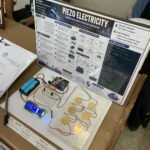
The Rescue Rhythm CPR Training Assistant monitors the quality of chest compressions in real time and immediately informs trainees whether the pressure applied is correct, too weak, or too strong. The system features a digital display, color-coded indicators, and an audible buzzer that guides users throughout the training session, helping them perform CPR according to recommended standards.
In addition to providing instant feedback, the device records the total number of chest compressions performed and evaluates the trainee’s overall performance, allowing instructors and students to identify areas for improvement. The technology is designed to make CPR training more accurate, interactive, and effective.
The project was developed by Kashish Imam, Musfira Kamran, Rahul Mushtaq, and Muhammad Imaduddin under the supervision of Engineer Syeda Tehreem Qamar.
Engineer Rida Fatima, Head of the Biomedical Engineering Department, said that increasing access to proper CPR training could help save countless lives by enabling more people to respond effectively during medical emergencies. She noted that the device has strong potential for use in hospitals, nursing colleges, first-aid training institutes, emergency rescue organizations, and healthcare training centers.
The innovative project was showcased at the Aligarh Institute of Technology Project Exhibition 2026, where it received appreciation from doctors, academics, healthcare professionals, and industry experts. Visitors described the project as a practical and impactful innovation that could strengthen emergency medical training and contribute to better patient survival outcomes across Pakistan.