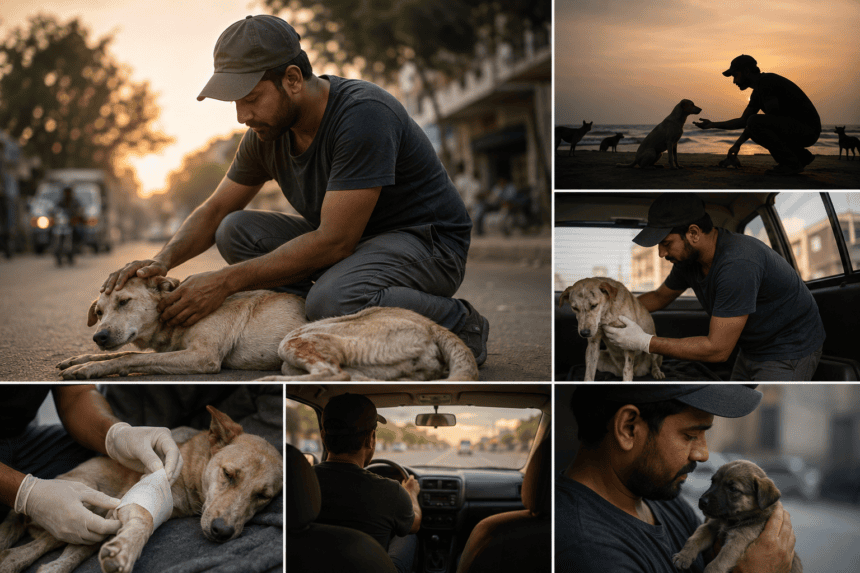
Syed Zeeshan doesn’t wait for a call from a government department or a formal rescue organization. When a stray dog is hit by a car on a bustling Karachi artery or a kitten is found trapped in a storm drain, he just gets in his van.
For the past several years, Zeeshan has been the city’s unofficial first responder for animals that society typically ignores. Working out of a modified vehicle that serves as both transport and a mobile clinic, he navigates the city’s chaotic traffic to reach creatures that would otherwise die on the asphalt.
The stakes are high in a city of over 20 million people. Stray animals here face constant threats—from traffic accidents to deliberate poisoning and the harsh realities of urban sprawl. While animal rights remain a low priority in municipal planning, Zeeshan’s solo operation fills a void that local authorities have failed to address for decades.
“People tell me I’m wasting my time on dogs and cats when humans are suffering,” Zeeshan says. “But these animals have no voice. They don’t have a choice in where they live or how they die. If I don’t pick them up, who will?”
His work isn’t just about rescue; it’s about basic triage. Inside his van, he keeps crates, basic medical supplies, and food. He isn’t a veterinarian, but he has learned the hard way how to stabilize injuries, dress wounds, and transport animals to the few private clinics willing to treat strays at a discount.
The financial burden rests entirely on his shoulders. He funds the fuel, the medical supplies, and the maintenance of his van through his own modest income and small, sporadic donations from local residents who have witnessed his work. He doesn’t have a dedicated facility or a staff of volunteers. He is the dispatcher, the driver, and the caregiver.
Critics often point to the stray dog population as a public health concern, advocating for culling programs that have historically been brutal and ineffective. Zeeshan argues for a different approach: humane population control through vaccination and sterilization. He sees his daily rounds as a small but necessary step toward changing the city’s relationship with its street animals.
His van is a common sight in areas like Gulshan-e-Iqbal and Clifton, where shopkeepers and residents now know who to call when they see an animal in distress. He isn’t looking for accolades or institutional support.
As he pulls away from a curb, leaving behind a bandaged dog now resting in the shade, Zeeshan is already looking at his phone. There’s another report of an injured animal on the other side of town. The traffic is thick, the heat is rising, and he’s the only one heading in that direction.