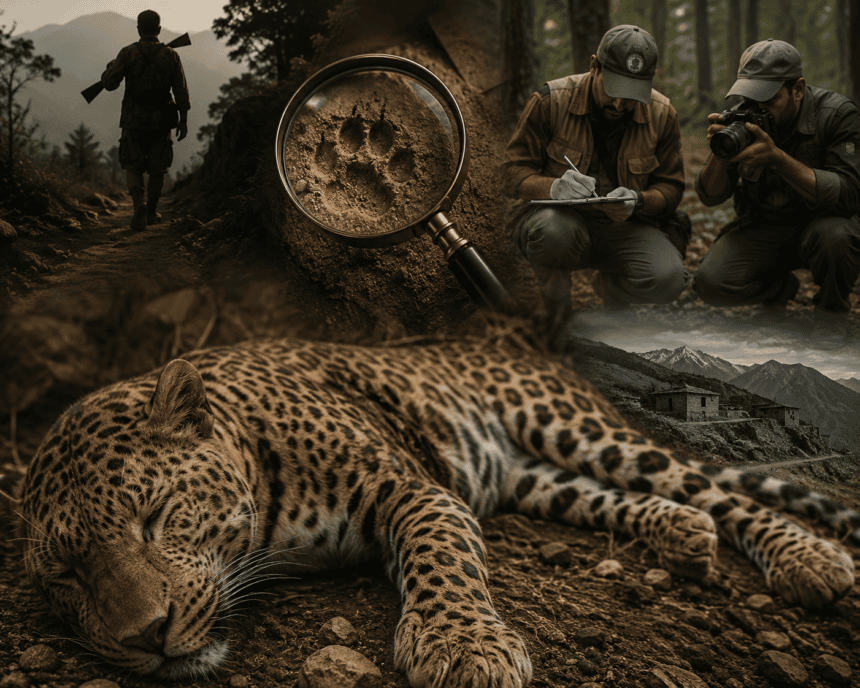
BAJAUR — A common leopard is dead after being cornered and killed by local residents in Bajaur, marking a grim escalation in human-wildlife conflict along Pakistan’s northwestern border.
Videos circulating on social media show the animal, visibly distressed, surrounded by a crowd before being struck down. The incident took place in a remote hilly pocket of the district, an area where the encroachment of human settlements into natural habitats has become increasingly common.
The provincial wildlife department has launched an inquiry into the killing. District wildlife officer Fazal Rabi confirmed that teams are currently identifying the individuals involved in the attack. Under the Khyber Pakhtunkhwa Wildlife and Biodiversity Act, the leopard is a protected species; killing one carries heavy fines and potential prison time.
“We are reviewing the footage to identify those who took the law into their own hands,” Rabi said. “There are established protocols for dealing with wildlife encroaching on human territory, and mob violence isn’t one of them.”
Local residents claim the leopard had been stalking livestock for weeks, creating a climate of fear in the village. This isn’t an isolated case. As deforestation and rapid urbanization shrink the natural corridors of large predators in the region, encounters are rising. When these animals descend from the high altitudes in search of food, they often find themselves in the crosshairs of villagers protecting their livelihood.
Conservationists argue that reactive measures—such as investigations after a killing—won’t stop the trend. They point to a lack of compensation schemes for lost livestock as a primary driver for the violence. Without a financial safety net, villagers feel they have little choice but to eliminate the threat themselves.
The wildlife department now faces the task of balancing the enforcement of protection laws with the genuine security concerns of a rural population. Until the state provides a clear pathway for managing these encounters, the cycle of panic and retaliation in Bajaur’s hills is unlikely to end.