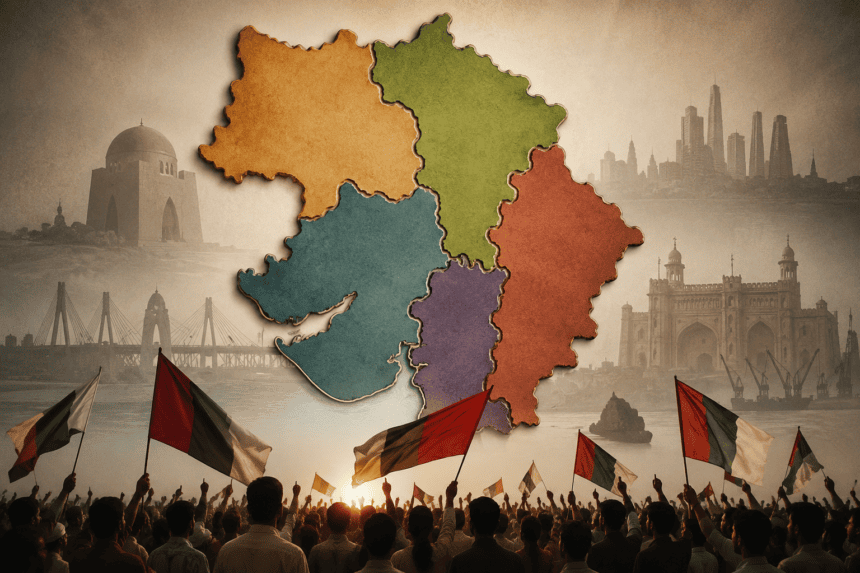
The Muttahida Qaumi Movement-Pakistan (MQM-P) has escalated its campaign for the creation of new administrative units, specifically targeting the division of Sindh. Party leadership, speaking at a rally in Karachi on Sunday, framed the move as the only viable path to decentralizing power and ensuring equitable resource distribution.
For MQM-P, this isn’t just political rhetoric; it’s a survival tactic. The party’s influence has waned since its 2013 peak, and by reviving the demand for new provinces—specifically a “Southern Sindh” or administrative autonomy for urban centers—they are attempting to consolidate their core voter base in Karachi and Hyderabad.
“We aren’t asking for a division of the country, we are asking for the division of administrative burdens,” said Mustafa Kamal, a senior party leader, during the Karachi event. He argued that the current provincial setup leaves urban centers underfunded while resources are swallowed by the provincial capital.
The timing is calculated. With the federal government struggling to manage national economic instability, MQM-P is positioning itself as a champion for local governance. They argue the 18th Amendment—which devolved powers from the federal to the provincial level—failed to reach the grassroots. Instead, they claim, power simply shifted from Islamabad to Karachi, leaving the rest of the province’s districts in a cycle of neglect.
Opposition to the move remains fierce. The Pakistan Peoples Party (PPP), which holds a firm grip on Sindh’s provincial assembly, has dismissed the demand as “divisive politics.” PPP leaders frequently point to the historical sensitivity of the issue, warning that such rhetoric threatens the social fabric of the province. They view the MQM-P’s push as a distraction from the party’s inability to deliver on basic municipal promises in Karachi.
Analysts suggest the MQM-P faces a steep climb. Creating new provinces requires a constitutional amendment—a two-thirds majority in parliament that is currently out of reach for any single party, let alone a coalition partner like the MQM-P.
Despite the legislative hurdles, the party is betting that keeping the issue in the headlines will force the federal government to concede more fiscal powers to local governments. It’s a high-stakes gamble. If they push too hard, they risk further isolation; if they pull back, they lose the narrative that has defined their platform for decades.
For now, the MQM-P has signaled that this campaign is just beginning. Whether it translates into actual policy change or remains a tool for political posturing, the demand has once again laid bare the deep-seated friction between Sindh’s urban centers and the provincial administration.