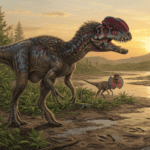
A new fossil study has revealed fresh insights into Sarahsaurus, an early long-necked dinosaur that lived during the Early Jurassic Period approximately 190 million years ago. The latest research is helping paleontologists better understand its anatomy, growth, movement, and the early evolution of sauropodomorph dinosaurs.
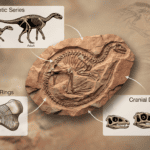
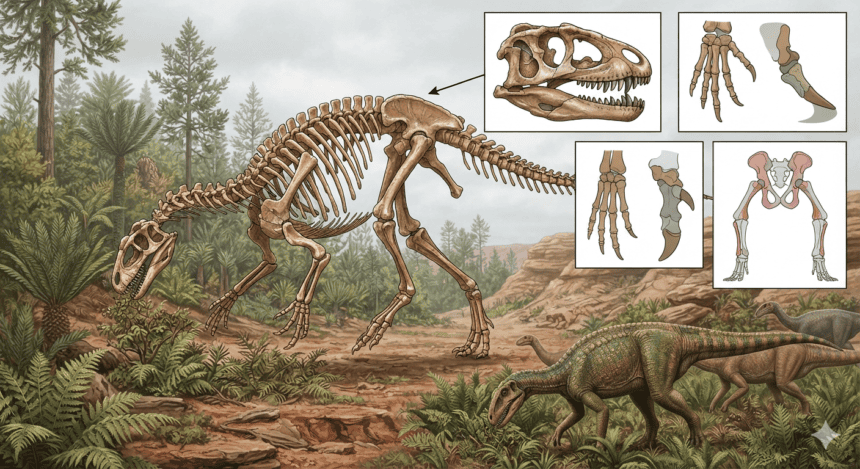
Researchers examined well-preserved fossil remains using CT scanning, 3D digital reconstruction, and biomechanical analysis. The study provided new information about Sarahsaurus’ skull, limbs, vertebrae, and overall body structure, revealing how it adapted to life in ancient terrestrial environments.
Sarahsaurus measured around 4 to 5 meters (13–16 feet) in length and is believed to have been primarily herbivorous, feeding on ferns, cycads, and other prehistoric vegetation. Scientists suggest it may also have occasionally consumed small animals or insects, although plants likely made up most of its diet.
The research indicates that Sarahsaurus possessed strong hind limbs and flexible forelimbs, allowing it to move efficiently while foraging. Its long neck enabled it to reach a wide range of vegetation without needing to move its entire body, giving it an advantage in searching for food.
Scientists also found evidence that Sarahsaurus belonged to an important stage in dinosaur evolution, representing a transition between smaller early dinosaurs and the gigantic long-necked sauropods that later dominated prehistoric landscapes.
Researchers believe the fossil discoveries improve our understanding of how early sauropodomorphs adapted to changing environments and diversified across ancient continents during the Jurassic Period.
Experts say continued fossil excavations and advanced imaging technology will help uncover even more details about Sarahsaurus, providing valuable clues about the origins and evolution of some of Earth’s largest dinosaurs.