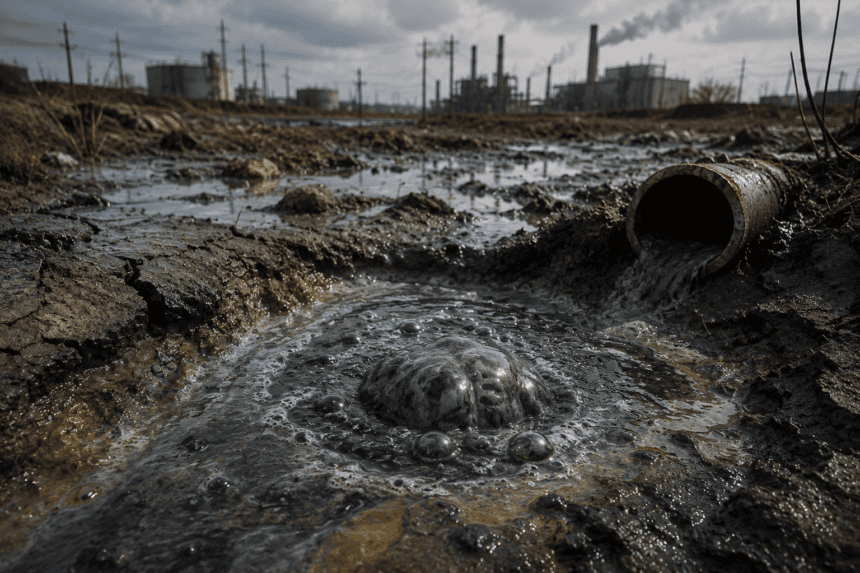
SALEM, Ohio — Residents in parts of rural Ohio are facing a quiet, chemical-laden emergency: toxic wastewater is literally bubbling up from the ground. The issue, tied to the disposal of byproducts from oil and gas drilling, has transformed quiet residential plots into hazardous zones, leaving local families with little guidance from state regulators.
The phenomenon, often referred to as “brine weeping,” occurs when concentrated wastewater—a mix of heavy metals, radioactive materials like radium, and fracking chemicals—leaches from poorly managed disposal sites or abandoned wells. It isn’t just an eyesore. It is a potential public health catastrophe unfolding in backyards.
For the families living near these sites, the reality is stark. The ground turns black, vegetation dies off in patches, and the air carries a sharp, metallic odor. The Ohio Department of Natural Resources (ODNR) has faced intense scrutiny for its oversight, with critics arguing that the agency’s data collection is either outdated or intentionally obscured to protect the energy industry.
“We aren’t just dealing with mud,” said one resident who requested anonymity due to ongoing legal threats from local operators. “We’re dealing with something that burns your skin and ruins your well water. We’ve been reporting this for months, and the state’s response is a shrug.”
The stakes are high. Radium-226 and Radium-228, common in oilfield waste, are known carcinogens. When these substances seep into the topsoil or migrate into groundwater, the cleanup process is not only expensive but technically difficult. Unlike standard agricultural runoff, this waste requires specialized handling that most rural counties aren’t equipped to manage.
State regulators have historically maintained that the waste is “contained,” yet the physical evidence in Salem and surrounding areas contradicts that narrative. Independent testing commissioned by local environmental groups has shown levels of total dissolved solids (TDS) and heavy metals that far exceed federal safety standards for surface soil.
The industry argues these instances are isolated “mechanical failures” at disposal wells, but the frequency of these reports suggests a systemic issue with infrastructure that is aging faster than it is being inspected.
As the state continues to weigh the economic benefits of the drilling boom against the environmental cost, the people on the ground are running out of time. For these families, the “toxic bubbling” isn’t a political debate—it’s a daily struggle to keep their children and livestock safe from a hazard that refuses to stay buried.