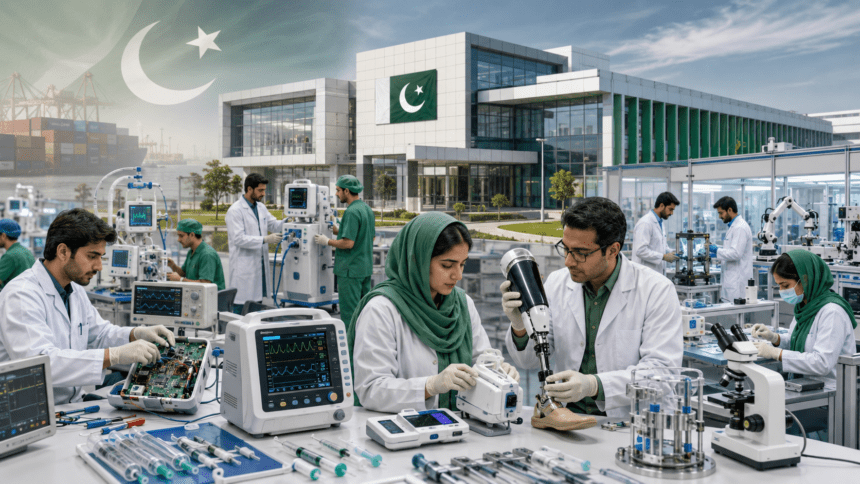
Pakistan has officially inaugurated its first National Institute of Medical Devices, a facility aimed at ending the country’s heavy dependence on imported healthcare technology. The move, finalized this week, marks a shift in the government’s health policy as it attempts to localize the production of everything from surgical instruments to high-end diagnostic machinery.
The institute will function under the Drug Regulatory Authority of Pakistan (DRAP). Its primary mandate is to streamline the certification process for locally manufactured equipment, which has historically been stifled by bureaucratic bottlenecks and a lack of standardized testing facilities.
For years, local manufacturers have struggled to compete with international brands. While Sialkot has long been a global hub for surgical tools, the absence of a national certification body meant that sophisticated medical devices often lacked the necessary safety clearances to enter the domestic market.
Domestic hospitals, as a result, have been forced to spend billions of dollars annually on imported gear. The institute plans to bridge this gap by providing technical oversight and quality assurance. Officials say the facility will offer a “single-window” clearance system for local innovators, cutting down the time it takes to get a new product from the laboratory to the hospital ward. Health experts remain cautiously optimistic.
While the infrastructure is a step forward, the real test lies in the institute’s ability to maintain international quality standards. Without rigorous oversight, the move risks flooding the market with substandard equipment that could compromise patient safety.
The government has earmarked a specific budget for the initial phase, focusing on research and development incentives for private sector firms. The goal is to lower the cost of healthcare for the average citizen by replacing expensive imports with affordable, locally-made alternatives.
Whether this institute can actually displace established global supply chains depends on the consistency of the regulatory framework. For now, the facility stands as a signal that the state is finally attempting to treat medical technology as a matter of national security rather than a retail import.