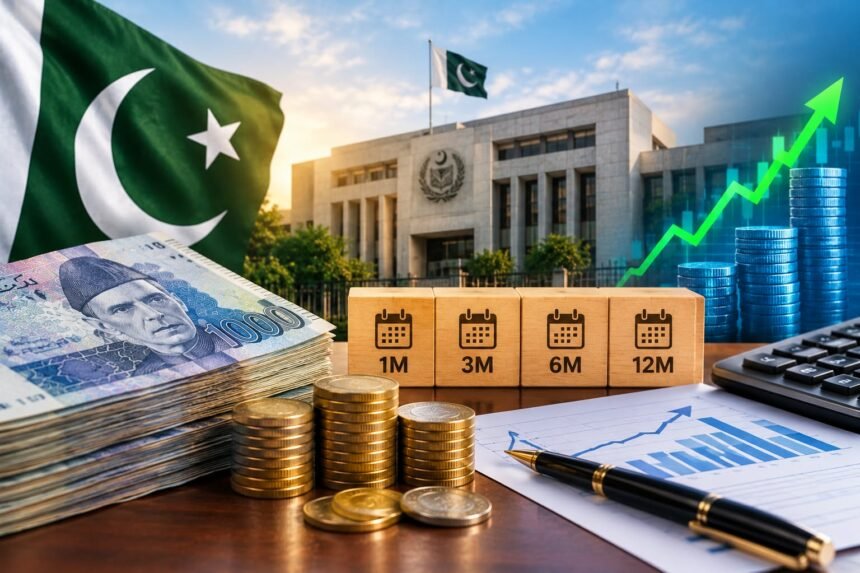
KARACHI, October 29, 2026: The Government of Pakistan has raised approximately Rs1.91 trillion through an auction of Market Treasury Bills (MTBs), exceeding its original borrowing target of Rs1.65 trillion. The auction was conducted by the State Bank of Pakistan (SBP) on October 28, with total bids reaching approximately Rs4.87 trillion across four maturities.
The auction covered one-month, three-month, six-month and 12-month Treasury Bills. Three-month securities attracted the largest amount of competitive bids, with approximately Rs783.5 billion accepted. The government also accepted around Rs473 billion in one-month bills, Rs169.5 billion in six-month bills and Rs242.7 billion in 12-month bills through competitive bidding.
The auction results showed a significant increase in cut-off yields compared with the previous auction held on October 14. The cut-off yield on one-month Treasury Bills rose to 12.1055%, while the three-month yield increased to 12.4261%. The six-month yield reached 12.65%, and the 12-month yield climbed to 12.89%. These higher yields indicate that the government is borrowing at increased short-term financing rates.
The development follows the SBP’s decision on October 26 to increase its policy rate by 50 basis points to 12%. The central bank cited rising inflationary pressures, elevated global energy prices and geopolitical tensions as important considerations behind the monetary policy decision. Higher policy rates can influence borrowing costs across financial markets, including yields on government securities.
Treasury Bills are short-term government debt instruments used to finance public-sector cash requirements. Banks and other eligible investors purchase these securities, providing funds to the government under specified terms. The auction results therefore offer an indication of government borrowing needs, investor demand and prevailing short-term interest rates.
However, the strong demand for government securities has also raised questions about private-sector financing. When banks allocate a substantial portion of their funds to government debt, fewer resources may be available for lending to businesses and other private borrowers. At the same time, higher yields can increase the government’s future debt-servicing burden.
The latest auction highlights the challenges facing Pakistan’s financial sector as the government manages its borrowing requirements amid higher interest rates and inflationary pressures. Future borrowing costs will depend on monetary policy, inflation trends, market liquidity and investor demand for government securities.