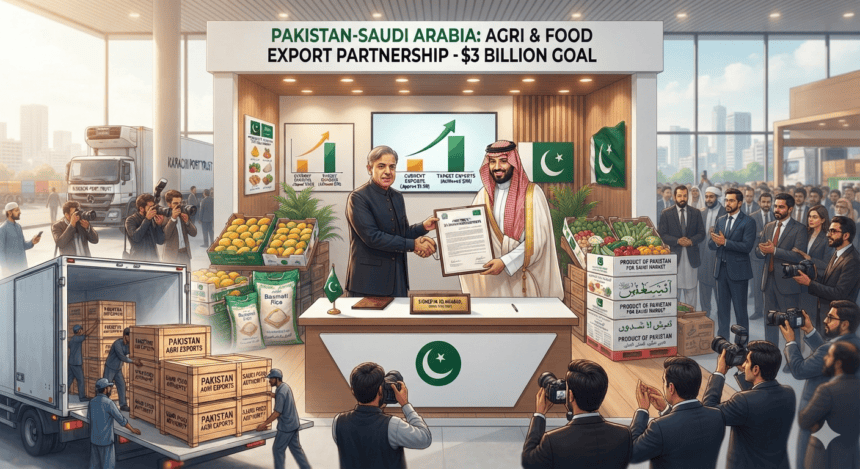
Pakistan and Saudi Arabia have finalized a roadmap to push their bilateral agricultural and food exports to $3 billion. The agreement, reached during high-level trade discussions in Riyadh, aims to pivot Pakistan from a supplier of raw commodities to a value-added food exporter.
The deal centers on streamlining supply chains. Saudi officials want to secure their food supply lines, while Islamabad is desperate to bridge its widening trade deficit. The $3 billion target isn’t just a figure; it’s a direct response to the Saudi Vision 2030, which prioritizes national food security.
For Pakistan, the challenge remains consistency. Saudi importers have long complained about erratic supply schedules and failing to meet strict phytosanitary standards. This new framework includes a joint task force to monitor quality control at the source, effectively creating a “fast-track” channel for Pakistani produce entering Saudi markets.
“We aren’t just looking at volume anymore,” a trade official involved in the negotiations said on condition of anonymity. “The Saudis want processed meat, packaged dairy, and high-end fruits—not just bulk grain shipments. That’s where the real money is for our farmers.”
The move marks a departure from traditional trade patterns. Previously, Pakistan relied heavily on low-margin bulk exports. By shifting toward processed goods, the government expects to increase per-unit value, though the infrastructure to support such a shift—cold storage, modern slaughterhouses, and certified packaging plants—remains thin.
The government in Islamabad has already begun identifying specific zones in Punjab and Sindh to prioritize for Saudi-bound export goods. Investors from the Kingdom are expected to visit these sites next month to scout for joint venture opportunities in processing facilities.
While the $3 billion goal is ambitious, it hinges entirely on Pakistan’s ability to overhaul its aging agricultural logistics. Without immediate investment in cold-chain infrastructure, the target risks becoming another headline that fails to materialize on the ground.