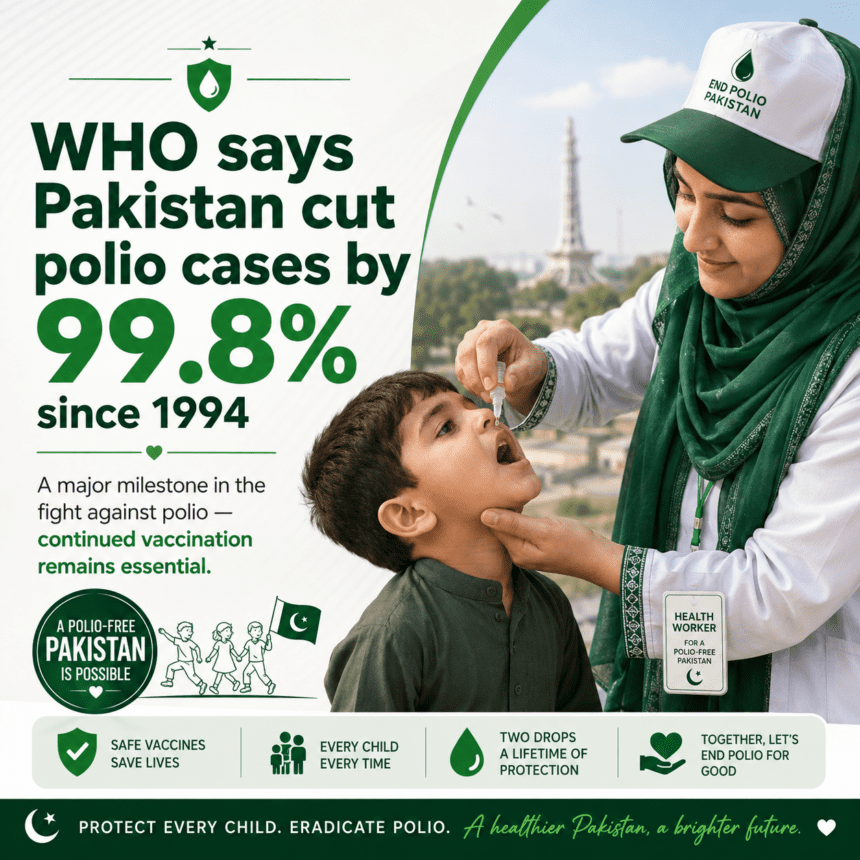
Pakistan has wiped out 99.8% of polio cases since 1994. That is the official word from the World Health Organization (WHO), marking the end of a three-decade stretch that saw the country move from thousands of paralyzed children annually to a handful. In 1994, when Pakistan first launched its coordinated immunization drives, the country was recording an estimated 20,000 cases a year.
Fast forward thirty years, and the virus has been backed into a corner. Yet, health officials aren’t popping champagne. The final 0.2% is proving to be the most stubborn, and recent data suggests the virus is fighting back. While the 99.8% reduction is a monumental logistical achievement, 2024 has been a wake-up call. After nearly reaching zero, Pakistan has recorded 48 cases so far this year.
Most of these are concentrated in Balochistan and Khyber Pakhtunkhwa—areas where insecurity, vaccine boycotts, and a “re-infection loop” with neighboring Afghanistan keep the virus alive. The WHO data reflects a massive, often bloody, public health campaign.
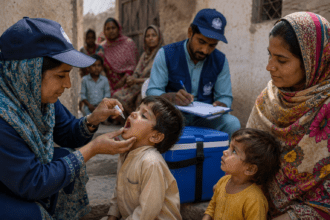
Thousands of frontline workers have spent decades navigating flood zones, war-torn districts, and deep-seated community mistrust. Many have paid with their lives; militant attacks on polio teams remain a grim reality in the border regions.
“The progress is historic, but the risk is immediate,” says a senior official at the National Emergency Operations Centre. He noted that while clinical cases are down from the 90s, environmental samples—the virus found in sewage tell a different story.
“The virus is still breathing in our cities. It’s in Karachi, it’s in Islamabad, and it’s moving with the population.” The “So What?” for the average Pakistani is simple: as long as that 0.2% exists, no child is safe. Polio is one of the few diseases that requires total eradication to be considered a victory. Anything less than 100% is a temporary truce.
The current surge in cases has forced the government to pivot. They are no longer just fighting a disease; they are fighting fatigue. Parents in high-risk zones are increasingly frustrated with repeated door-knocking, while health workers face the dual threat of violence and burnout.
Pakistan and Afghanistan remain the last two countries on earth where wild poliovirus is endemic.
The WHO’s 99.8% figure is a testament to a generation of effort, but in the world of epidemiology, the last mile is always the longest. If Pakistan can’t close that 0.2% gap soon, the gains of the last thirty years could evaporate in a single season.