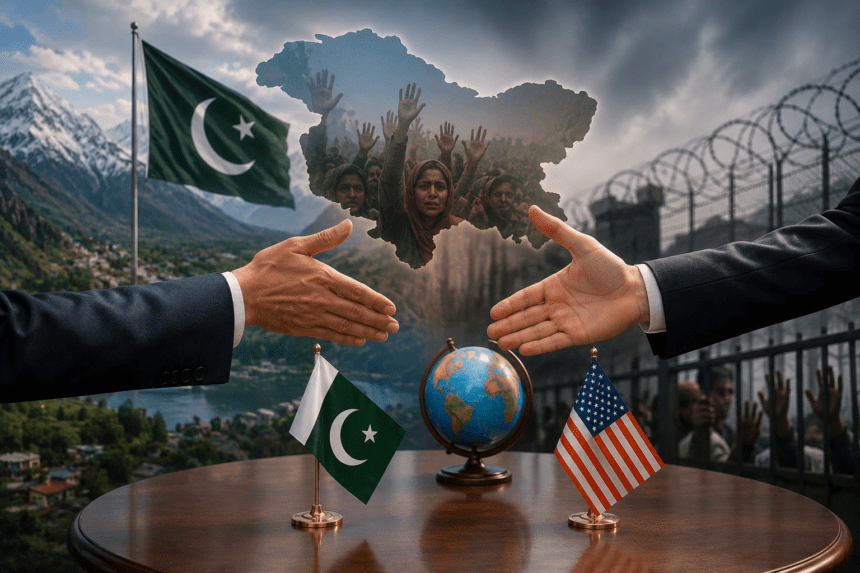
Islamabad: Pakistan has urged the United States to use its influence with India to help stop alleged human rights violations in Indian-administered Kashmir and secure the release of detained Kashmiri political leaders, activists, journalists and rights defenders.
The appeal is part of Islamabad’s renewed diplomatic push to keep the Kashmir dispute on the international agenda, particularly at a time when Pakistan says political space in the region has continued to shrink since India’s August 5, 2019 move to revoke Jammu and Kashmir’s special constitutional status.
Pakistan’s Foreign Office has repeatedly accused Indian authorities of using security laws, raids and detentions to silence Kashmiri voices. In a recent briefing, the FO called for the immediate and unconditional release of Kashmiri political leaders and human rights defenders, including women leaders Asiya Andrabi, Fehmeeda Sofi and Nahida Nasreen.
Islamabad has also raised concern over what it describes as arbitrary arrests, media restrictions and pressure on civil society in the disputed region. A recent official statement cited findings by UN experts, saying nearly 2,800 people, including journalists, students and human rights advocates, had faced arrest or detention in Indian-administered Kashmir.
Pakistan says Washington should not treat Kashmir only as a bilateral issue between Pakistan and India, but as a human rights and international law concern. Officials argue that the US, given its close ties with New Delhi, can press India to restore civil liberties, allow political activity, end curbs on dissent and release those Pakistan describes as political prisoners.
The demand also includes the release of prominent Kashmiri detainees and Hurriyat-linked figures, including Yasin Malik, Shabbir Ahmad Shah, Masarat Alam, Asiya Andrabi and others who remain jailed under Indian laws. Pakistan maintains that many of these cases are politically motivated, while India says its actions are linked to national security and counterterrorism.
The Kashmir dispute has remained one of the most sensitive issues between the nuclear-armed neighbours. India and Pakistan have fought wars over the region, and diplomatic ties worsened sharply after New Delhi’s 2019 constitutional changes. India insists Jammu and Kashmir is its internal matter, while Pakistan argues the dispute must be resolved according to UN Security Council resolutions and the wishes of the Kashmiri people.
The United States has previously expressed concern over detentions and restrictions in Kashmir. In 2019, a senior US official urged India to release detainees quickly, restore basic liberties and respect legal procedures after the clampdown that followed the revocation of Article 370.
For Pakistan, the current appeal is not just about prisoner releases. It is also an attempt to push Kashmir back into global diplomatic conversation at a time when regional crises, trade interests and strategic partnerships often overshadow the dispute.
Islamabad says meaningful peace in South Asia will remain difficult unless Kashmiris are granted fundamental rights and a political voice. For now, the message from Pakistan is clear: it wants the US to press India harder, not merely call for calm from a distance.