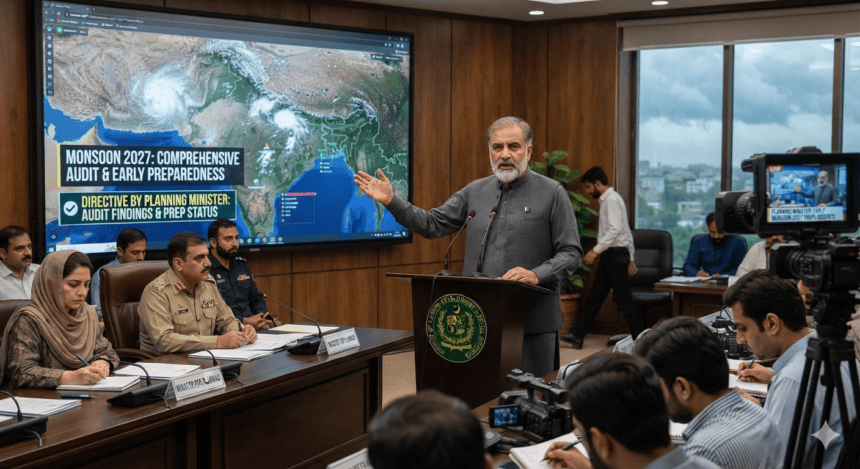
Planning Minister Ahsan Iqbal has ordered an immediate, comprehensive audit of existing drainage infrastructure and flood management systems, signaling an unusually early start to preparations for the 2027 monsoon season.
The directive follows a series of internal briefings where officials flagged increasing unpredictability in regional weather patterns. Iqbal’s office confirmed the move is intended to avoid the reactive “emergency mode” that has defined disaster response in recent years.
The audit will focus on high-risk zones across the Indus River basin. Engineers are tasked with identifying structural weaknesses in embankments and spillways that failed during previous record-breaking seasons. The ministry wants this data on the table by year-end to allow for budget reallocation before the next fiscal cycle begins.
“We are shifting the focus from relief to resilience,” a ministry official said. “Waiting until May to check if a dam can hold is a luxury we no longer have.”
The urgency stems from data showing a shift in monsoon onset timings and intensity over the last three years. Meteorologists have warned that traditional flood maps are increasingly unreliable. The government’s new approach aims to integrate satellite-based predictive modeling with on-the-ground infrastructure assessments.
Critics have often pointed to the lack of long-term maintenance in provincial water channels as a primary driver of flood damage. By mandating a federal audit now, Iqbal is attempting to force provincial departments to account for maintenance gaps before the next rainy season begins.
The Planning Ministry faces a tight window. Securing funding for large-scale infrastructure repairs requires a lengthy procurement process, and officials admit that getting contractors on-site before the 2027 rains arrive will be a logistical challenge.
If the audit identifies critical failures in key infrastructure, the government may have to divert funds from other development projects to prioritize emergency repairs. The coming months will reveal if this preemptive strategy can outpace the changing climate.