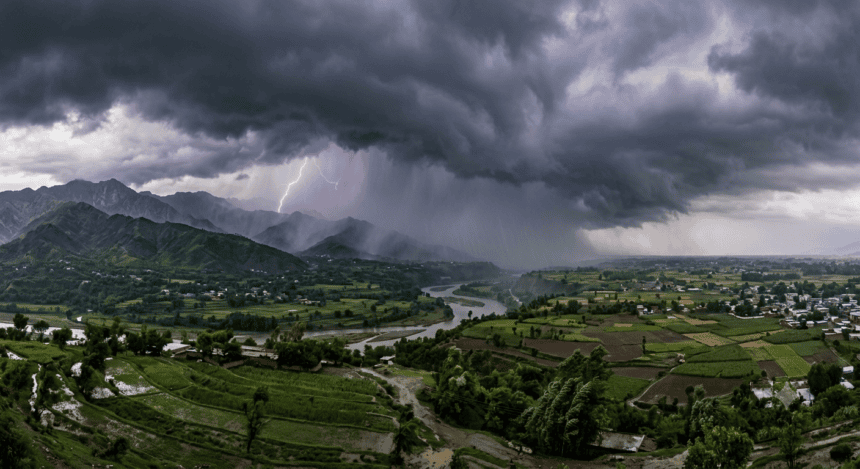
The Pakistan Meteorological Department (PMD) has issued a nationwide alert for a fresh monsoon spell starting July 29, warning of heavy rains that could trigger urban flooding and landslides. The current weather system is expected to persist through August 5, bringing moisture-laden winds from the Arabian Sea and the Bay of Bengal into the upper and central parts of the country.
Expect the heaviest rainfall between July 30 and August 3. The Met Office predicts significant downpours in Islamabad, Rawalpindi, Lahore, and Peshawar. These urban centers face a recurring threat of flash flooding, as drainage systems in these cities frequently struggle to keep pace with intense, short-duration bursts of rain.
“We are tracking a strong weather system that will likely cover the entire country,” a PMD spokesperson said. “The intensity will be high enough to cause water accumulation in low-lying areas, and we’ve advised provincial authorities to remain on high alert.”
Beyond the major cities, the mountainous regions of Khyber Pakhtunkhwa, Galyat, Murree, and Kashmir are under a specific advisory. The combination of saturated soil and heavy rain increases the risk of landslides, which have historically disrupted key supply routes and tourism in these areas during the monsoon months.
Farmers in barani (rain-fed) areas should manage their crops accordingly, as excessive water could damage standing harvests. Meanwhile, the National Disaster Management Authority (NDMA) has directed local administrations to pre-position emergency equipment and ensure that rescue teams are ready to mobilize if conditions deteriorate.
The PMD’s forecast suggests this week will be wetter than the previous one, marking a peak in the current monsoon cycle. With high humidity levels and persistent cloud cover, temperatures might see a slight dip, yet the primary concern remains the management of water runoff.
Local residents in flood-prone zones should monitor updates throughout the week. If the predicted volume of rainfall hits the upper threshold, authorities may be forced to initiate precautionary evacuations in vulnerable riverine belts.