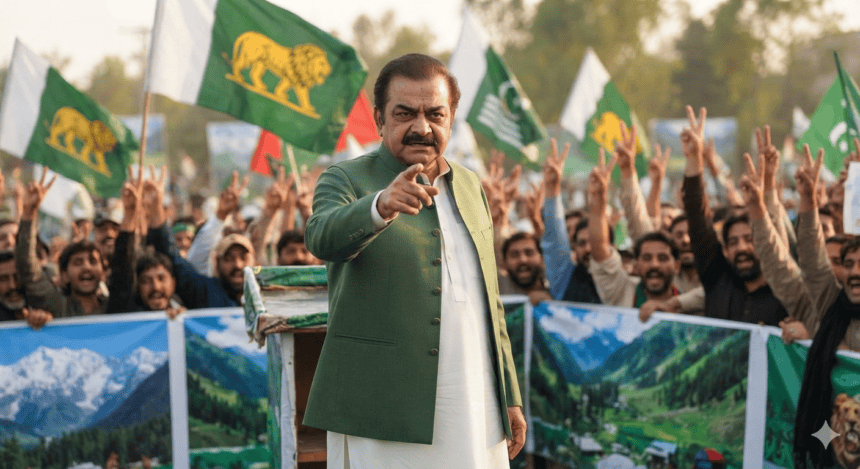
Rana Sanaullah claims the Pakistan Muslim League-Nawaz (PML-N) is poised to secure a two-thirds majority in the upcoming Azad Jammu and Kashmir (AJK) elections. The veteran politician, currently serving as an advisor to the Prime Minister, insists the party’s ground game in the region has shifted firmly in their favor.
Sanaullah’s confidence rests on what he describes as the party’s “restored” standing among the Kashmiri electorate. He argues that voters have moved past the political instability that plagued the region in recent years, viewing the PML-N as the only stable hand capable of steering AJK through its ongoing economic and administrative hurdles.
Critics, however, view the statement as standard pre-poll posturing. Opposition figures in the region suggest the PML-N is struggling to maintain a cohesive front, pointing to internal party fractures that have historically hindered their performance in AJK’s unique political landscape.
The math for a two-thirds majority is steep. AJK politics often rely on local clan dynamics and tribal allegiances rather than national party manifestos. For Sanaullah’s prediction to hold, the PML-N must not only sweep the urban centers but also flip key rural constituencies that have remained loyal to local power brokers for decades.
The federal government’s influence remains a contentious variable. While Sanaullah frames the upcoming vote as a mandate for PML-N’s federal policies, his opponents argue that any federal overreach will trigger a backlash among voters wary of Islamabad’s direct intervention in local affairs.
Sanaullah didn’t detail the specific polling data or internal surveys backing his claim. Instead, he leaned on the narrative of political inevitability, suggesting that the “voter mood” has crystallized behind the party’s leadership.
Whether this is a genuine assessment of the political climate or a calculated attempt to boost worker morale remains the central question. With the election cycle approaching, the PML-N now faces the challenge of proving that its organizational strength matches its rhetoric.