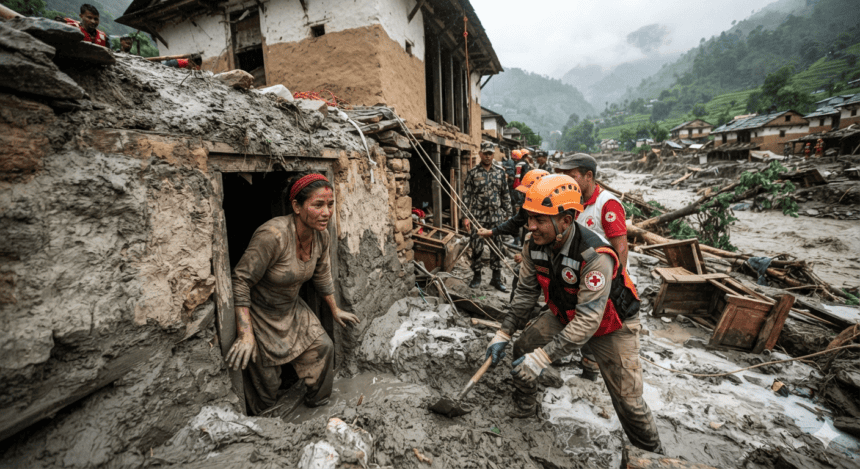
KATHMANDU — For three agonizing days, 45-year-old Sunita Karki lay pinned beneath the wreckage of her own home. As monsoon-triggered landslides tore through the hillside in Nepal’s Kavrepalanchok district, her house collapsed, burying her in a suffocating pocket of mud, timber, and corrugated metal.
The rescue came not from a sophisticated search team, but from the persistent digging of neighbors who refused to give up on the site.
When the landslide struck last week, Karki was trapped in a small, air-tight void created by a fallen heavy beam. Above her, the mountain had effectively erased the village landscape. Below, she could hear the muffled voices of rescuers, but her own cries for help were swallowed by the dense, wet earth.
“I had lost hope by the second night,” Karki told local health workers after her extraction. “The water was seeping in, and the cold was unbearable.”
Her survival is an outlier in a disaster that has claimed hundreds of lives across Nepal this monsoon season. The flooding and landslides, fueled by record-breaking rainfall, have turned rural mountain communities into islands. Roads are severed, power lines are downed, and the sheer volume of debris has hampered the use of heavy machinery.
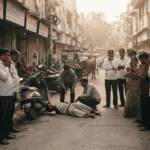
Rescuers eventually located Karki after a neighbor noticed a slight movement in the debris pile. The rescue operation itself took nearly six hours, requiring workers to hand-clear the mud to avoid triggering a secondary collapse.
“We were digging with our bare hands because a machine would have crushed her,” said Ramesh Thapa, a local volunteer who led the effort. “We didn’t know if we were pulling out a body or a survivor until she blinked.”
Karki is currently recovering at a hospital in Kathmandu, treated for severe dehydration and crush injuries to her legs. While she is stable, the psychological toll of the ordeal remains visible. She is one of thousands left homeless as the government struggles to distribute aid to remote regions where landslides have turned mud-tracks into impassable ravines.
For now, the focus in Kavrepalanchok has shifted from rescue to the grim task of recovery. As the rain continues to batter the region, the death toll is expected to rise. Karki’s survival remains a rare glimmer of hope in a landscape that has been fundamentally reshaped by the storm.
“I am alive,” she whispered to her daughter yesterday. “But I have nothing left to return to.”