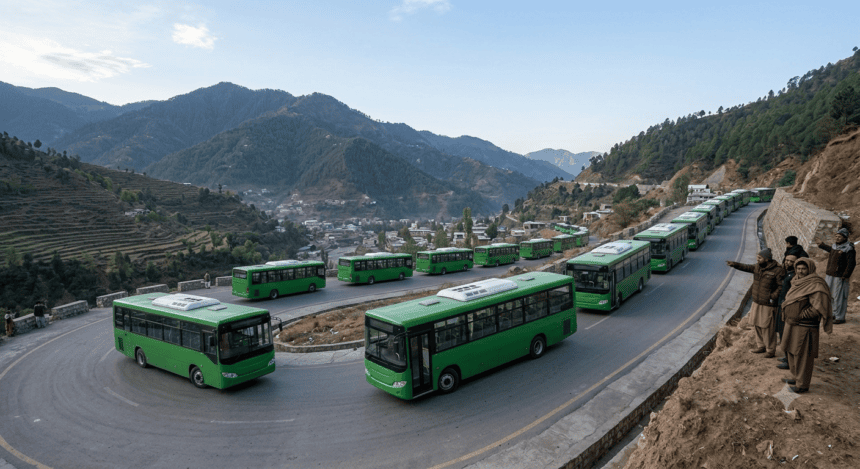
MUZAFFARABAD — A fleet of buses promised by Punjab Chief Minister Maryam Nawaz has reached Azad Jammu and Kashmir, triggering an immediate standoff between the provincial government and the region’s electoral watchdog.
The arrival of the vehicles—marketed as a gift to the Kashmiri public—comes just days before critical by-elections. The Election Commission of AJK has now issued a stern warning, labeling the move a potential breach of the electoral code of conduct designed to keep government resources from influencing voter sentiment.
Election officials have signaled they are reviewing whether the delivery constitutes an illegal attempt to sway the electorate. The commission’s mandate is clear: sitting administrations are barred from announcing or delivering development projects or “gifts” once an election schedule is locked in.
Critics of the ruling party argue the timing is far from coincidental. By injecting high-visibility infrastructure into the region on the eve of the polls, the PML-N is testing the boundaries of the code of conduct. For opposition leaders, the buses aren’t just transport; they are a calculated political maneuver disguised as public service.
The PML-N leadership in the region maintains the buses are a long-overdue fulfillment of a commitment made to improve public transit. They argue that the administrative process for the delivery began months ago and that the timing is merely a matter of logistics, not strategy.
Yet, the optics remain fraught. In a region where political loyalties are often fluid, the sight of brand-new buses bearing the provincial government’s mark serves as a powerful, if controversial, campaign tool.
The Election Commission has now requested a formal report on the transfer. If the findings confirm that the delivery was timed to gain an electoral edge, the commission could face a difficult choice: order the vehicles grounded until after the polls or initiate formal proceedings against those responsible for the deployment.
For now, the buses sit in the regional capital—a tangible addition to the transport network that has become the latest flashpoint in an increasingly tense local election. Whether they stay on the road or are ordered off, the move has already succeeded in shifting the campaign conversation away from policy and toward the ethics of governance.