By using this site, you agree to the Privacy Policy and Terms of Use.
Accept
Media HydeMedia Hyde
  • Home
  • Politics
  • Education
  • Entertainment
  • Sports
  • Blogs
  • Business & Commerce
  • Others
    • Religious
    • Metropolitan
    • Climate and Weather
Font ResizerAa
Media HydeMedia Hyde
Font ResizerAa
  • Home
  • Politics
  • Education
  • Entertainment
  • Sports
  • Blogs
  • Business & Commerce
  • Others
    • Religious
    • Metropolitan
    • Climate and Weather
Follow US
© 2026 Media Hyde Network. All Rights Reserved.
Education

Punjab Education Department Sets Grade 4 Assessment Schedule

Last updated: May 7, 2026 12:21 am
Misbah Jogyat
Share
Punjab Education Department Sets Grade 4 Assessment Schedule
SHARE

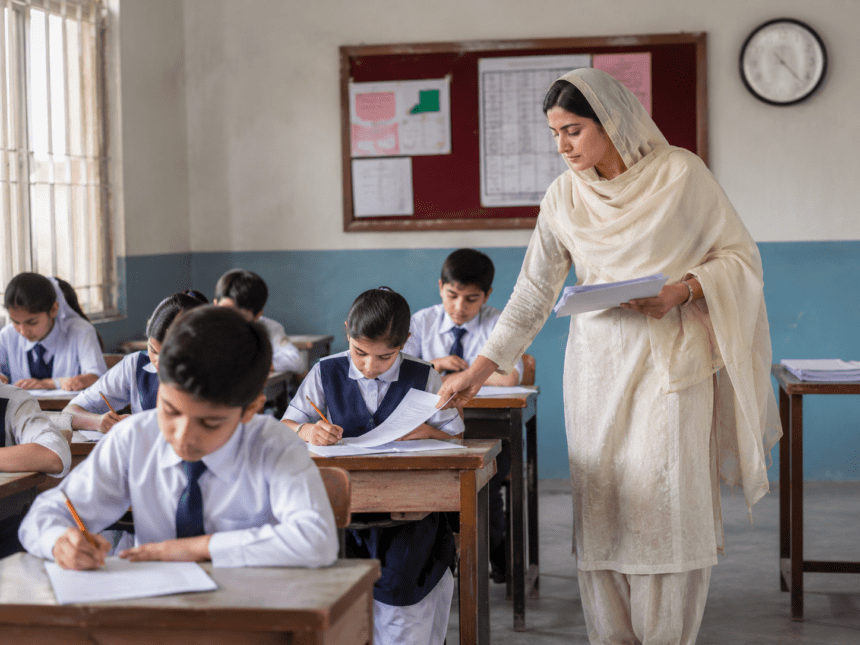
The Punjab Examination Commission (PEC) has finalized the assessment schedule for Grade 4 students across the province. Schools will conduct these annual examinations from February 15 to February 28, marking a shift toward a centralized testing framework designed to standardize learning outcomes.

The move comes as the provincial government pushes to address disparities in primary education quality. Officials aim to use this data to identify schools struggling with literacy and numeracy benchmarks, a persistent challenge in the region’s rural districts.

“We aren’t just testing students; we are auditing the effectiveness of our current curriculum delivery,” said a senior official within the School Education Department. He spoke on condition of anonymity, citing the sensitivity of upcoming budget allocations tied to these results. The assessment will cover five core subjects: English, Urdu, Mathematics, Science, and Social Studies.

Unlike previous years, the PEC has mandated that question papers be generated through a computerized random selection process. This aims to curb the widespread practice of “teaching to the test” by discouraging instructors from relying on predictable, past-year patterns. For parents and teachers, the timeline leaves little room for maneuver.

The syllabus completion deadline is February 5, giving schools just ten days for intensive revision before the first paper is handed out.

Critics argue the compressed timeline puts undue pressure on students, particularly in under-resourced public schools that have faced frequent disruptions this academic year. Several teacher unions have already voiced concerns, suggesting that the focus on standardized testing risks sidelining the creative aspects of the primary curriculum.

Regardless of the pushback, the government remains firm. The results are expected to be compiled by mid-March, with individual performance reports provided to both parents and district education officers.

For the provincial administration, this schedule is the first real test of their new data-driven education policy. If the results prove as disappointing as some internal projections suggest, the department will face significant pressure to overhaul its primary schooling strategy before the next academic cycle begins.

Share This Article
Email Copy Link Print
Previous Article Punjab Board Delays Matric Exams Amid Security and Logistics Concerns Punjab Board Delays Matric Exams Amid Security and Logistics Concerns
Next Article Karachi University Faculty Boycotts Exams Over Pension Crisis Karachi University Faculty Boycotts Exams Over Pension Crisis
Leave a Comment

Leave a Reply Cancel reply

Your email address will not be published. Required fields are marked *

Sponsored Ads

Stay Connected

FacebookLike
XFollow
InstagramFollow
YoutubeSubscribe
WhatsAppFollow
ThreadsFollow
Sindh Schools to Close for Two-Month Summer Break Starting June 1
Education
May 13, 2026
Pakistan Targets Tech Workforce with 20,000 AI Training Slots
Education
May 13, 2026
Tokyo University Launches Fully Autonomous Lab Where Robots Run the Show The lights are on at the University of Tokyo’s newest chemistry lab, but the lab coats are gone. In a move that signals a shift for experimental science, the university has officially opened a facility where robots handle the entire research cycle—from mixing chemicals to analyzing results—without a single human in the room. This isn’t just a room with a few automated arms. It’s a closed-loop system designed to hunt for new materials for batteries and semiconductors at speeds that make traditional methods look like they’re standing still. The AI designs the experiment, the robots execute it, and the data feeds right back into the AI to decide what happens next. "The goal is to remove the bottleneck of human physical labor," a researcher involved in the project’s pilot phase said. "A human can do maybe ten experiments a day. This system won't stop at ten, and it doesn't need to go home at 5:00 PM." The stakes are high. Japan is currently locked in a global race to find more efficient materials for the next generation of electric vehicle batteries. By cutting humans out of the "pipette-and-wait" cycle, the university expects to compress years of trial-and-error into a few weeks of non-stop robotic iteration. It’s a response to a looming crisis, too. Japan’s shrinking workforce means there are fewer young scientists entering the field every year. Automating the grunt work isn't just about speed; it’s about survival in a country where human talent is becoming a scarce resource. Critics often worry that "robot-run" means "job-lost," but the university’s lead engineers argue the opposite. They say the move frees up researchers to actually think, rather than spending eight hours a day performing repetitive liquid handling. The robots don't get bored, they don't make clerical errors, and they don't suffer from "Friday afternoon" fatigue that can ruin a data set. The lab is currently focused on thin-film materials, but the team plans to scale the technology to other branches of chemistry soon. If it works, the image of the lone scientist hunched over a workbench might soon be a relic of the past. The lab is running right now. It’ll be running tomorrow morning. And it won't need a coffee break to get through the night.
Tokyo University Launches Fully Autonomous Lab Where Robots Run the Show
Education
May 13, 2026
Pakistan Offers New Higher Education Scholarships to Bangladeshi Students
Education
May 13, 2026
Private Schools Defy Punjab Government’s Revised Summer Vacation Schedule
Education
May 13, 2026
HEC Drops Paperwork: Fully Online Degree Attestation Goes Live Nationwide
Education
May 13, 2026

You Might Also Like

Education

Punjab Tightens Security Across All Schools

By
Naureen Farooq
Education

Aalto University Offers Fully Funded Master’s Scholarships for 2026

By
Alisha Akhtar
Education

Ex-Cricket Semi-final: FUUAST against Salim Habib Summer Series

By
Haroon Ayaz
Education

Punjab Issues 8th Class Smart Syllabus to Reduce Student Workload

By
Alisha Akhtar
Media Hyde Media Hyde Dark
Facebook Twitter Youtube Rss Medium

About US

Media Hyde Network: Your instant connection to breaking stories and live updates. Stay informed with our real-time coverage across politics, tech, entertainment, and more. Your reliable source for 24/7 News.

Top Categories
  • Headline
  • Politics
  • Entertainment
  • Education
  • Sports
  • Religious
  • Metropolitan
  • Climate and Weather
Usefull Links
  • Contact Us
  • Disclaimer
  • Privacy Policy
  • Cookies Policy
  • Advertising Policy
  • Terms & Conditions

© 2025 Media Hyde Network. All Rights Reserved.

Welcome Back!

Sign in to your account

Username or Email Address
Password

Lost your password?