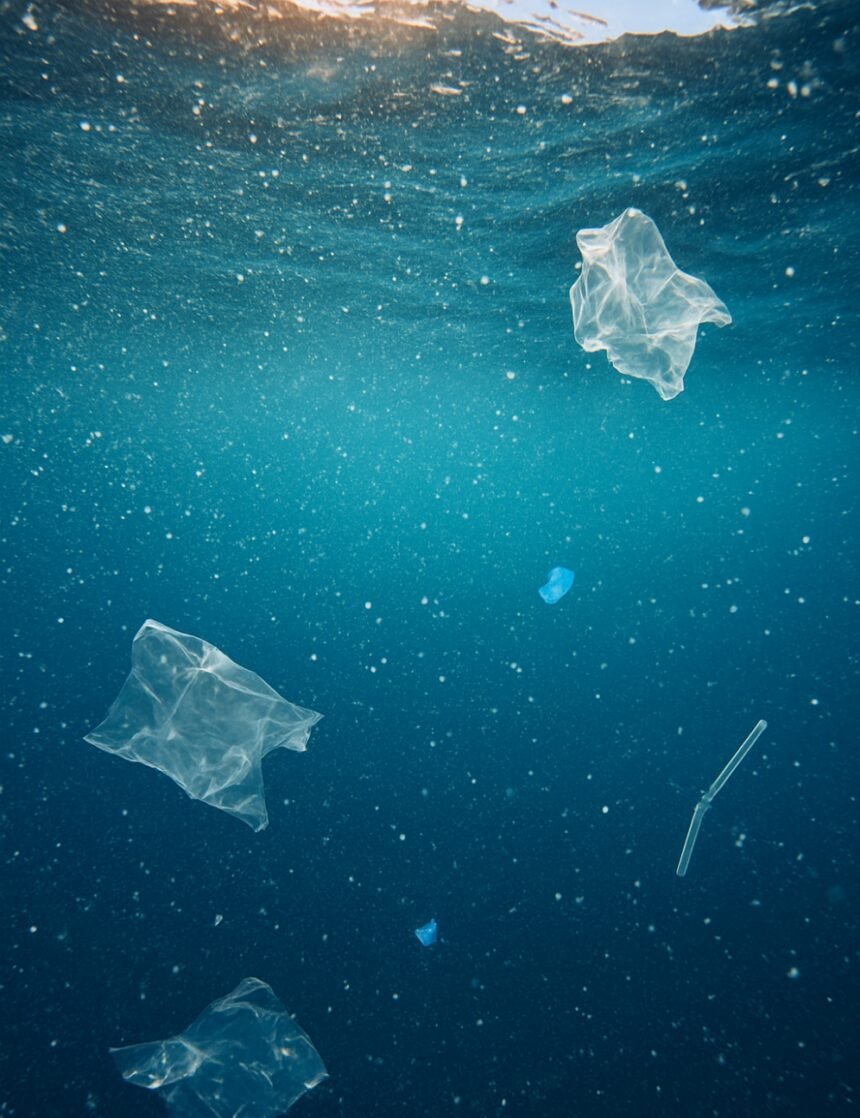
Nanoplastics in the North Atlantic: The Hidden Threat Beneath the Surface
In a groundbreaking study, scientists have discovered an estimated 27 million metric tons of nanoplastics floating throughout the North Atlantic Ocean a finding that sheds light on a previously overlooked threat to marine and human life.
For the first time ever, researchers have measured nanoplastics in the open ocean, revealing that these tiny plastic particles 1,000 times smaller than microplastics make up the majority of plastic pollution in the sea. Unlike visible plastic waste, nanoplastics are invisible to the naked eye, yet they are far more dangerous because they are small enough to pass through living cell membranes, even those of the human brain.
According to the research team led by Dušan Materić of the Institute for Marine and Atmospheric Research Utrecht, the amount of nanoplastics they detected is nine times higher than the estimated total of larger plastic and microplastic debris in all the world’s oceans. This discovery fills a massive gap in previous calculations of ocean plastic pollution.
“We are closing that budget with nanoplastics,” said Materić. “So, in a sense, we discovered the missing pollutant.”
The scientists collected water samples from 12 different locations in the North Atlantic, testing three different depths from the surface to the seafloor. Shockingly, nanoplastics were present at all depths, proving just how widespread the contamination has become.
Interestingly, the researchers found fewer nanoplastics in areas where microplastics usually accumulate, like the infamous North Atlantic garbage patch. Instead, these particles were more scattered on the surface and more concentrated deeper in the ocean. This suggests that nanoplastics may not just result from broken-down microplastics, but also from direct entry into the ocean via the atmosphere or from larger plastics.
Another surprising discovery was the absence of polyethylene, the plastic commonly used in shopping bags and considered one of the most abundant types of microplastic. Scientists believe this could mean unknown chemical or physical processes are preventing it from breaking down into nanoplastics or allowing it to survive in that form.
This study marks a new chapter in plastic pollution research. As Materić puts it, “We need to start printing new pages of scientific discoveries.” There are still many questions to explore, such as:
- How do nanoplastics impact marine life and food chains?
- Could they affect cloud formation and climate systems?
- What role do nanoplastics play in the global plastic cycle?
The findings are not only alarming but also a call to action for further research and stricter plastic pollution control. As the world learns more about these invisible pollutants, it becomes increasingly urgent to address their sources and understand their long-term consequences on the planet and human health.
The ocean is not just littered with plastic bottles and bags it’s filled with microscopic plastic particles we cannot see, but which could pose a far greater danger than we ever imagined.