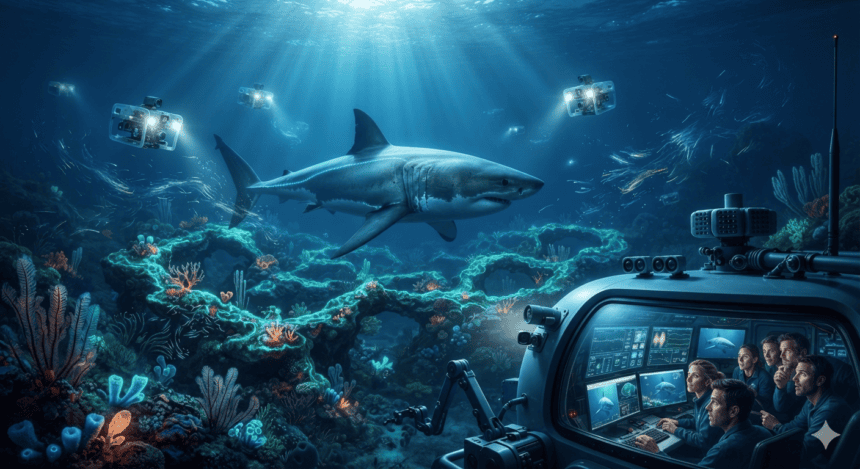
Scientists have discovered new insights into shark behavior, revealing how these ancient ocean predators hunt, communicate, navigate, and interact with their environment. The latest research is helping marine biologists better understand the lives of sharks and their vital role in maintaining healthy marine ecosystems.
Researchers tracked several shark species using satellite tags, underwater cameras, acoustic sensors, and drone observations. By analyzing their movements over long periods, scientists identified new patterns in migration, feeding behavior, and social interactions.
One of the study’s key findings is that many shark species display more complex behavior than previously believed. Rather than spending their lives alone, some sharks form temporary groups during migration, feeding, or breeding seasons, suggesting a higher level of social interaction.
Scientists also found that sharks rely on an extraordinary combination of senses to survive. Along with their highly developed sense of smell, they use electroreception—the ability to detect tiny electrical signals produced by other animals—to locate prey, even in dark or murky waters.
The research highlights how environmental changes, including rising ocean temperatures and shifting prey populations, are influencing shark migration routes and hunting behavior. Understanding these changes is becoming increasingly important for marine conservation.
Researchers also observed that some sharks travel thousands of kilometers across oceans, using ocean currents, water temperature, and possibly Earth’s magnetic field to navigate during long-distance migrations.
Experts say the findings improve our understanding of shark intelligence, adaptability, and ecological importance. As apex predators, sharks help maintain the balance of marine ecosystems by regulating populations of other marine species.
Scientists believe continued research and improved tracking technology will reveal even more about shark behavior, supporting global conservation efforts aimed at protecting these remarkable animals and the oceans they inhabit.