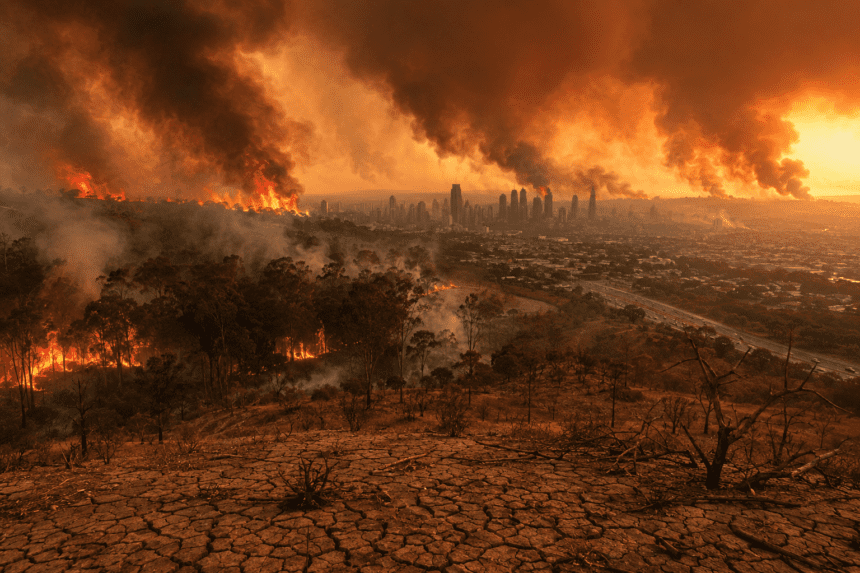
Climate Experts Say Record Temperatures, Droughts and Massive Fires Could Intensify Across the World
Climate scientists are warning that 2026 could become one of the most dangerous years for extreme weather in modern history as a powerful El Niño event is expected to develop alongside already record-breaking global temperatures.
Researchers say several alarming climate records have already been broken during the first half of the year. Arctic winter sea ice has fallen to its lowest level ever recorded, multiple countries experienced unusually intense winter heat waves, and more than 150 million hectares of land have already burned in wildfires worldwide.
According to the National Oceanic and Atmospheric Administration Climate Prediction Center, there is a 61 percent chance that El Niño conditions will emerge by July 2026 and continue through the end of the year.
El Niño is a natural climate pattern caused by warmer-than-normal Pacific Ocean temperatures. The phenomenon typically increases global temperatures and can influence weather patterns worldwide.
Scientists Fear ‘Unprecedented’ Fire Season
Climate experts from World Weather Attribution warned that the combination of El Niño and human-driven climate change could lead to an “unprecedented year of global fire.”
Daniel Swain, a climate scientist associated with the University of California, Los Angeles and the California Institute for Water Resources, said the world has never experienced a strong El Niño while global temperatures were already this high.
Scientists say wildfire activity has already intensified rapidly across parts of Africa, Southeast Asia, and northeastern China. A stronger El Niño could worsen drought conditions and fuel larger fires in regions such as the Amazon rainforest and Australia.
Experts also warned that much of the United States could face elevated wildfire risks later this year.
Climate Change Still the Main Driver
During a recent climate briefing, researchers emphasized that while El Niño may intensify weather extremes, long-term human-caused climate change remains the primary factor behind rising global temperatures and increasingly destructive disasters.
Frederike Otto, a climate scientist at Imperial College London and World Weather Attribution, said previous research consistently shows that climate change has a greater impact on extreme weather events than El Niño alone.
Scientists say global warming has already pushed average global temperatures close to 1.5 degrees Celsius above pre-industrial levels, increasing the likelihood of severe heat waves, prolonged droughts, stronger storms, and catastrophic wildfires.
Growing Concerns for the Months Ahead
Researchers believe the rapid start to this year’s wildfire season could signal a particularly dangerous second half of 2026.
Experts warn that if El Niño strengthens further during the summer, extreme heat and fire conditions may intensify across multiple continents simultaneously, potentially making this one of the worst wildfire years in recent history.
Climate agencies worldwide continue monitoring ocean temperatures and atmospheric conditions as governments prepare for the possibility of worsening environmental disasters in the months ahead.