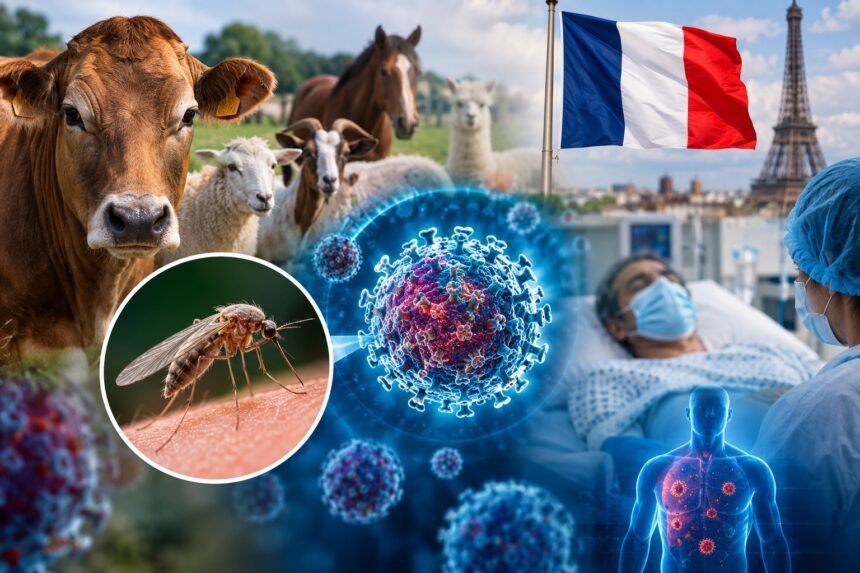
France has reported the first known human infection with the Shamonda virus, a disease previously identified mainly in livestock. The case has raised concerns among health experts, although authorities have not identified any wider risk to the public so far.
The infected person had serious underlying health problems and a severely weakened immune system. The patient died in early October, but investigations are continuing to determine whether the virus contributed to the death and how the infection occurred.
The Shamonda virus was first identified in cattle in Nigeria in 1965. It belongs to a group of viruses that primarily affect animals and can spread through the bites of tiny insects known as biting midges. Besides cattle, the virus may also affect sheep, goats, horses and other livestock.
In animals, infection can cause fever, weakness, diarrhoea, reduced appetite and lower milk production. In some cases, it may also lead to reproductive complications, including abortions and abnormalities in unborn animals.
Health authorities have not found evidence of sustained human-to-human transmission, and the reported case is currently considered isolated. Experts continue to investigate the circumstances surrounding the infection and are monitoring the situation for any additional cases.
There is currently no specific vaccine or antiviral treatment for Shamonda virus. Health experts emphasize the importance of continued surveillance and further research to understand its potential impact on both animal and human health.