Afghanistan has reported six new cases of polio, bringing the total number of confirmed infections in the country to 42 in 2026. The latest cases highlight the continuing challenge of eliminating the highly contagious virus and protecting children from permanent disability.
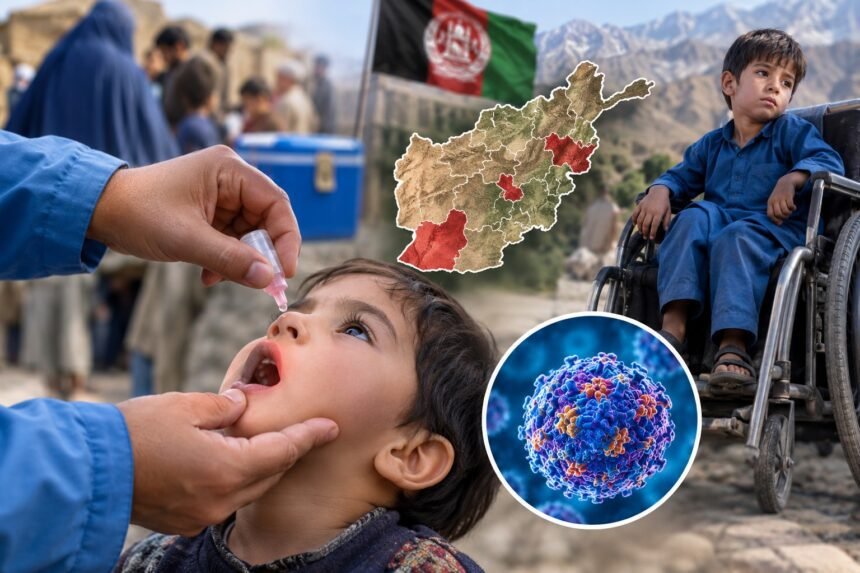
According to reported information, three of the new cases were detected in Kandahar province, while two were identified in Nangarhar province, in the Bati Kot and Goshta districts. Another case was reported in Musahi district of Kabul. The symptoms in these patients began between August 25 and September 9, 2026.
Health surveillance has also detected poliovirus in environmental samples collected in Kandahar. Such findings indicate that the virus may still be circulating in the community, even when infected individuals have not yet been identified. Environmental monitoring therefore remains an important part of efforts to detect and control the disease.
Polio is a viral disease that mainly affects children under five years of age. It spreads through contaminated food and water and can attack the nervous system, sometimes causing permanent paralysis. In severe cases, the disease can also be fatal. Although there is no cure for polio, vaccination provides effective protection against infection and its serious complications.
Afghanistan and Pakistan remain the only countries where wild poliovirus transmission has not been eliminated. Health authorities continue to emphasize the importance of vaccination campaigns, routine immunization and cooperation from parents to ensure that every child receives the recommended vaccine doses.
Health experts warn that missed vaccinations and gaps in immunization coverage can allow the virus to spread. Continued surveillance and coordinated vaccination efforts remain essential to protect children and achieve the global goal of polio eradication.