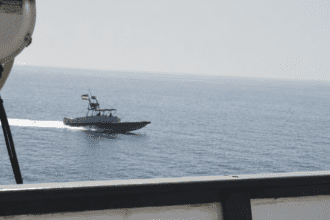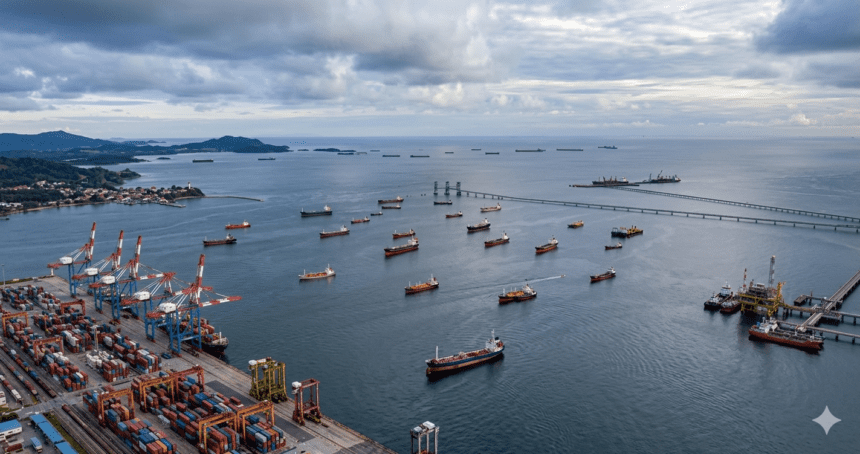
DUBAI / LONDON — Commercial shipping traffic through the strategic Strait of Hormuz has surged to its highest volume in two months, maritime tracking agencies confirmed on Friday. The sudden influx of transit vessels follows a landmark diplomatic breakthrough this week in which the United States and Iran signed an initial accord to halt their active military conflict and lift shipping restrictions along the vital global trade artery.
According to data compiled by maritime tracking firm AXSMarine, a total of 25 verified commercial vessels successfully crossed the newly reopened strait on Thursday, June 18. This represents the highest single-day transit count documented since mid-April and stands at more than five times the average daily volume recorded during the opening ten days of June.
The maritime artery had been effectively choked off by Iranian forces following retaliatory US and Israeli airstrikes that ignited the war on February 28, resulting in dozens of hostile encounters and kinetic attacks on commercial vessels over subsequent months. While peacetime traffic typically saw an average of 120 vessels per day pass through the passage—which accommodates a fifth of the world’s global petroleum and liquefied natural gas (LNG) exports—wartime traffic dropped precipitously to a mere 7.6 transits per day from March onward.
AXSMarine security analysts noted that Thursday’s true transit metrics could be even higher. The documented spike occurred alongside the most severe Automatic Identification System (AIS) signal disruption event recorded in the Persian Gulf since the outbreak of hostilities. Over 200 commercial vessels were simultaneously impacted by abnormal AIS behaviors and electronic spoofing, a tactic frequently utilized by ship masters to mask positions and evade detection while navigating highly contested waters.
Despite the initial surge in vessel movements, the maritime industry remains paralyzed by operational uncertainty. Shipping conglomerates and industry lobbies warn that definitive guidelines for resuming normal commercial corridors out of the Persian Gulf are dangerously ambiguous. While the International Maritime Organization (IMO) under Chief Arsenio Dominguez is actively formulating an emergency safe-transit blueprint, the human and corporate toll remains severe. More than 500 commercial vessels and an estimated 11,000 seafarers remain physically trapped inside the Gulf out of 20,000 maritime workers directly impacted by the conflict.
Furthermore, the operational rollout of the peace deal faced immediate friction on Friday following the sudden postponement of scheduled bilateral diplomatic talks in Switzerland. Geopolitical volatility also persisted as the Israeli military announced fresh airstrikes inside Lebanon, despite the core US-Iran framework intending to halt regional proxy fighting.
Nevertheless, global markets have reacted with aggressive optimism. The structural closure of the strait had previously catalyzed a steep spike in international energy pricing and severely throttled global agricultural supply chains, particularly fertilizer shipments. Following the initial peace declaration on June 14, global energy benchmarks collapsed. Swissquote senior analyst Ipek Ozkardeskaya observed that while the energy and maritime transport sectors are experiencing immediate financial relief that will eventually trickle down to the broader global economy, severe long-term market questions remain regarding Washington’s structural ability to fully enforce a lasting regional peace without the absolute strategic consensus of Israel.