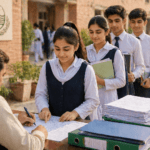
The Sindh education department has officially cleared three religious textbooks for use in public schools, marking a shift in how the province approaches minority education.
The move follows years of advocacy from Hindu community leaders who argued that existing curricula lacked representation and religious context for non-Muslim students. The government approved the books for grades 4, 5, and 6. Officials say these texts will replace the “Ethics” subject previously offered to students who opted out of Islamic Studies.
By introducing specific religious content, the province aims to provide a structured alternative that aligns with the faith of the Hindu student body. The decision arrives after the Sindh Textbook Board finalized the vetting process.
For years, students from minority backgrounds often found themselves in a vacuum during religious instruction hours, either sitting through Islamic studies or attending loosely structured ethics classes. These new books aim to provide a formal, consistent curriculum that the community has long demanded. “This isn’t just about books; it’s about acknowledging that our students have a right to learn their own history and faith within the classroom,” said a representative from a local minority rights organization.
He noted that the implementation will depend heavily on the availability of qualified teachers who understand the material a hurdle the department has yet to fully address. Critics have occasionally raised concerns about the content’s potential to spark sectarian friction, but the education department insists the material underwent a rigorous review process.
The books focus on foundational teachings, cultural history, and moral philosophy rather than controversial theological debates. The challenge now shifts to the classroom. With thousands of schools across the province, distributing these texts and training staff remains a logistical mountain.
The education minister has promised a phased rollout, starting with major urban centers before moving into the rural interior where the Hindu population is most concentrated. For thousands of families, the arrival of these books marks a quiet victory in a long-standing struggle for educational parity.
The real impact, however, will be measured by how seamlessly these texts integrate into the daily school schedule and whether the teachers in the field are ready to lead the conversation.