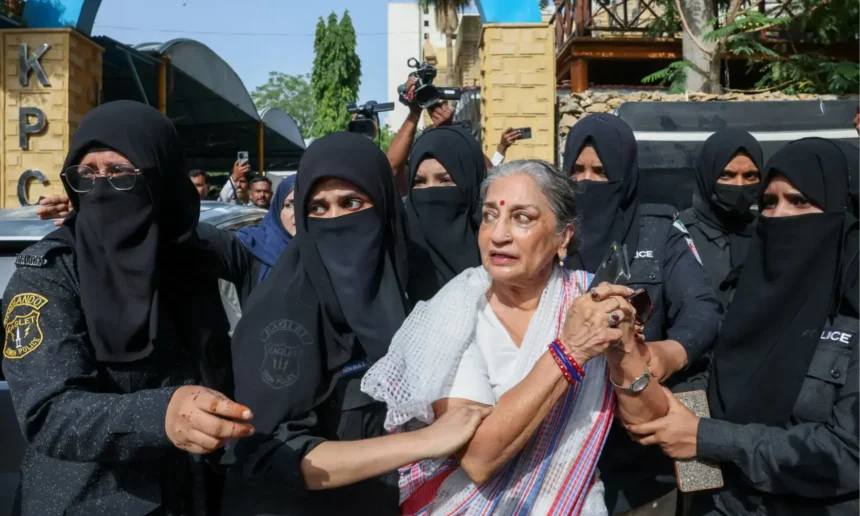
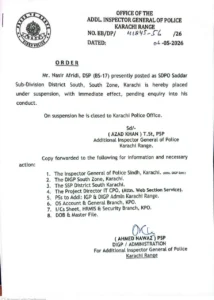
 Three Sindh police officials are off the job today after an internal inquiry found them responsible for manhandling activists during the Aurat March in Karachi.
The suspensions follow a wave of public outrage sparked by footage showing police using batons and physical force to block protesters. DIG South Syed Asad Raza confirmed the move late Tuesday, identifying the suspended personnel as a sub-inspector and two constables.
The confrontation began when participants tried to move their rally toward a restricted zone near the Governor House. What should have been a standard crowd-control operation devolved into a chaotic scuffle. Organizers say the police didn’t just block the path—they targeted women with “unnecessary and aggressive” force.
“We had every right to be there,” one organizer said, requesting anonymity for fear of further harassment. “Instead of protection, we got batons. Suspension is a start, but it doesn’t change the culture of how the state treats women in the streets.”
The police department’s initial stance was defensive, citing security protocols and “red zone” violations. However, the optics of uniformed men dragging female activists forced a pivot. Sindh’s Inspector General, Ghulam Nabi Memon, reportedly ordered the probe himself, sensing the growing political heat.
This isn’t just about three low-ranking officers. It’s a test of whether the Sindh government can balance its security mandates with the constitutional right to protest. For years, the Aurat March has faced pushback from both conservative circles and state machinery; this latest incident has only sharpened the divide.
The inquiry committee is expected to submit a full report by the end of the week. While the three officers remain under suspension, activists are pushing for criminal charges, arguing that administrative leave is a “slap on the wrist” for physical assault.
The Sindh government now finds itself in a corner—trying to appease human rights groups while maintaining the authority of its police force. For now, the streets are quiet, but the demand for systemic accountability is louder than ever.