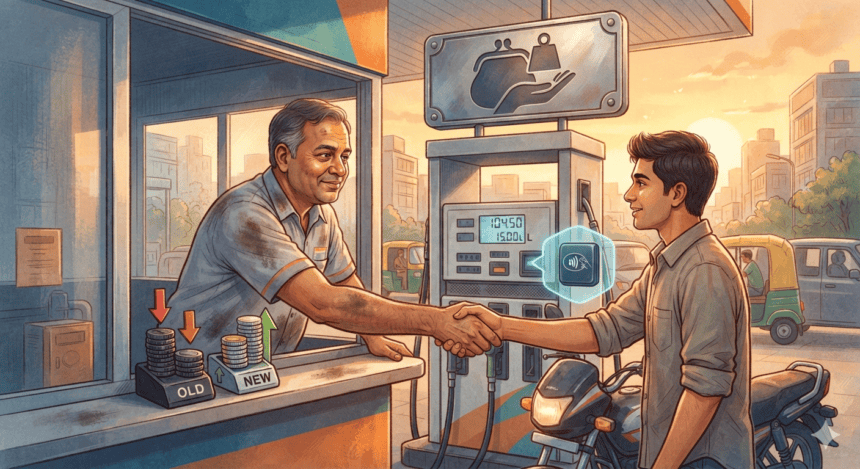
The State Bank of Pakistan has imposed a cap on merchant discount rates (MDR) for digital payments at fuel stations, a move aimed at reducing the operational costs for petrol pump operators.
Under the new regulatory framework, banks are now restricted from charging retail fuel outlets more than 0.25% on transactions processed through digital channels. This directive marks a significant shift from the previous, unregulated fee structure that often saw banks charging substantially higher rates, effectively eating into the thin profit margins of local fuel retailers.
Fuel station owners have long argued that high transaction fees made digital payments—such as credit or debit cards—financially unsustainable. Many stations responded by refusing card payments or passing the surcharge directly to the consumer, a practice that hindered the central bank’s broader push toward a cashless economy.
“The retail fuel sector operates on tight margins,” said an industry analyst familiar with the negotiations. “When you take a significant chunk of that margin for a bank transaction fee, the retailer is essentially paying to sell the fuel. This cap levels the playing field.”
The central bank’s decision acknowledges that digital adoption at the point-of-sale requires incentivization rather than penalization. By bringing the fee down to a nominal 0.25%, regulators expect a sharp increase in digital transaction volumes at stations across the country.
For the average motorist, the change may not be immediately visible, but it addresses a long-standing friction point at the pump. Retailers who previously steered customers toward cash to avoid high processing fees are now expected to embrace card terminals and QR-based payments, as the cost of doing so is no longer prohibitive.
The SBP’s directive also serves as a warning to commercial banks: the era of extracting high fees from essential retail services is over. Moving forward, the regulator will be monitoring compliance closely to ensure that banks do not find creative ways to inflate “processing costs” elsewhere.
With this policy, the central bank is betting that lower fees will drive enough volume to satisfy both the banks’ bottom lines and the retailers’ operational needs. Whether the banks will comply without attempting to offset the loss through other hidden service charges remains the primary concern for the retail sector.