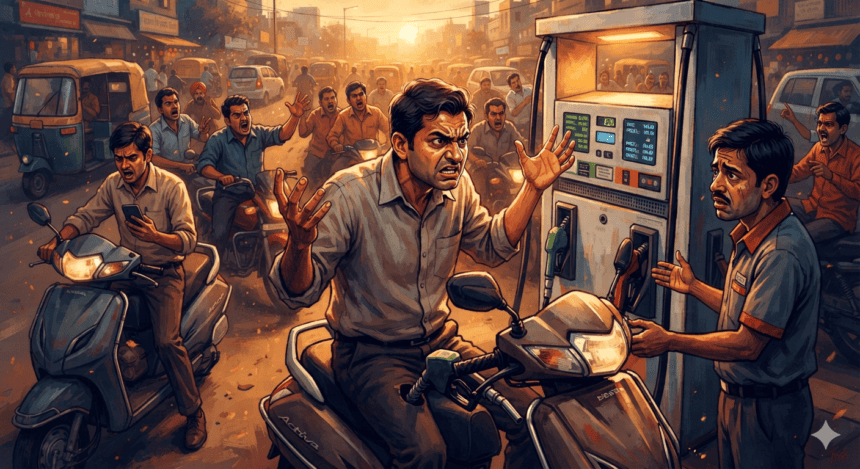
New Delhi is pushing hard to hit its 20% ethanol-blending target for petrol, but the transition is hitting a wall of resentment from millions of motorists. While the government positions the shift as a win for energy security and the environment, drivers are reporting a sharp drop in fuel efficiency and rising maintenance bills.
The math for the average commuter isn’t adding up. Ethanol contains less energy per unit than pure petrol. As the blend ratio creeps higher, the fuel economy of older vehicles—and even many newer ones—is noticeably plummeting. A trip that once cost a set amount now requires more frequent stops at the station.
“I used to get 45 kilometers to the liter on my bike; now I’m lucky if I hit 38,” said Rajesh Kumar, a delivery driver in Noida. He isn’t alone. Mechanics across the capital report a surge in fuel pump failures and corroded fuel lines, issues many blame on the higher solvent properties of ethanol in engines not specifically tuned for the blend.
The government maintains that the E20 fuel—petrol blended with 20% ethanol—is safe for vehicles manufactured after 2023. However, the vast majority of India’s massive two-wheeler and four-wheeler fleet predates this mandate. For those owners, the transition feels less like a green initiative and more like an invisible tax on their daily commute.
Automakers are in a difficult position. While they’ve begun rolling out E20-compliant engines, they aren’t retrofitting the millions of cars already on the road. The result is a widening gap between official policy and the reality inside the garage.
Critics point to the lack of clear labeling at many pumps. Drivers often pull up to a station without knowing if they are filling up with E10, E20, or something else entirely. This ambiguity leaves owners of older vehicles guessing, and in many cases, paying for the fallout.
As the government races to meet its 2025 deadline for nationwide E20 availability, the disconnect between policy goals and consumer experience remains wide. For the person behind the wheel, the promise of a cleaner future is currently being overshadowed by the rising cost of keeping their engine running today.