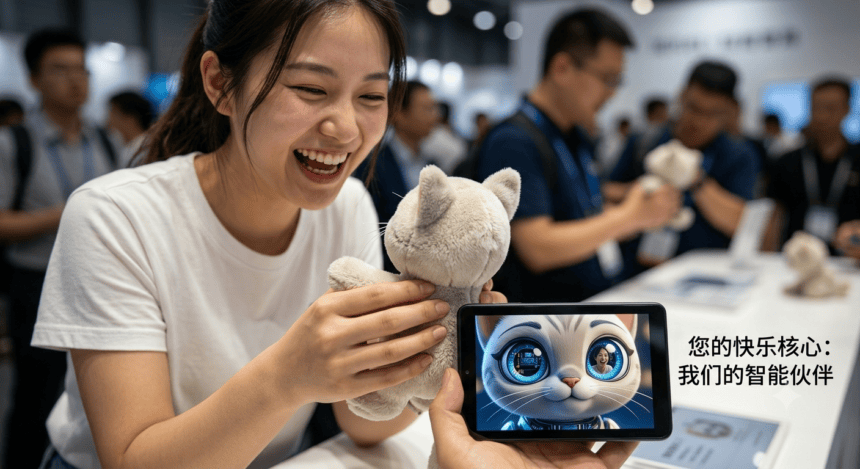
SHANGHAI — Global technology firms are aggressively racing to commercialize next-generation smartphones integrated with advanced “AI agents”—autonomous software capable of ordering food, comparing retail prices, and composing formal messages through simple voice commands. At the World Artificial Intelligence Conference in Shanghai, at least three hardware manufacturers showcased these agentic devices, signaling a paradigm shift in mobile computing. Chinese smartphone brand Nubia unveiled its NaviX Ultra, powered by ByteDance’s massively popular Doubao AI tool. Concurrently, Honour previewed its highly anticipated “Robot Phone,” featuring an interactive camera on a flipping robotic arm powered by models co-developed with Alibaba, while Shanghai-based startup StepFun introduced its STEPX Neo in deep partnership with local giants like Alipay and Didi.
Despite the technological breakthrough, the widespread adoption of AI-agent smartphones faces a massive corporate bottleneck: resistance from dominant app ecosystems. Market analysts from IDC and Counterpoint Research note that when early prototypes like the “Doubao Phone” debuted, major platforms including Alibaba, Tencent, and JD.com swiftly blocked the built-in assistant’s unauthorized access to preserve direct user interaction and data control. This digital protectionism has forced newer devices to rely on collaborative partnerships rather than forcing algorithmic entry into sovereign apps. While global giants like Google and US-based startup Brain Technologies are rushing similar agentic features to Western and Japanese markets, experts predict a prolonged struggle over business models, noting that within a decade, the conventional way consumers interact with individual mobile apps will be completely disrupted.